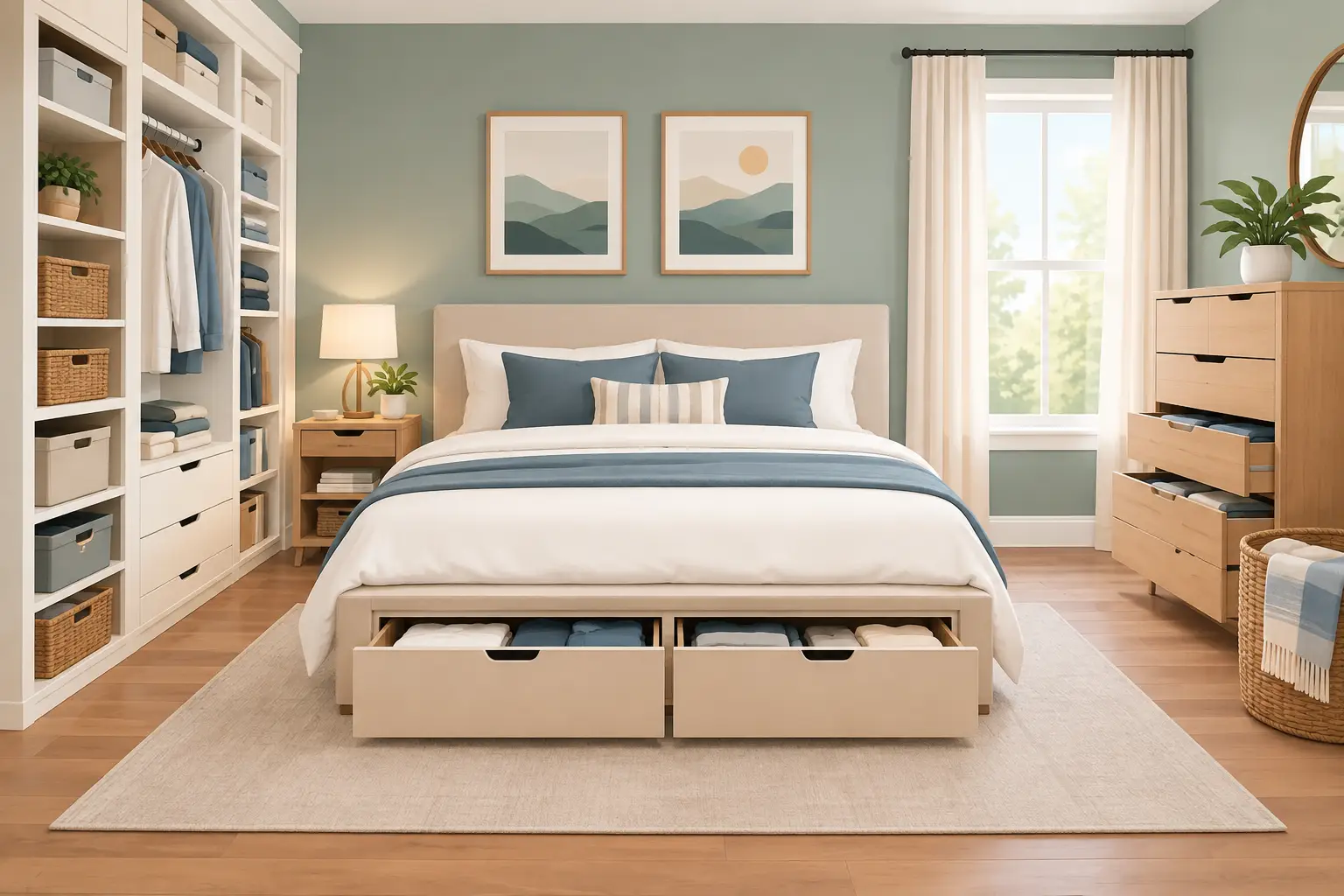
The laundry basket in the corner, toys under the bed and clothes draped over a chair all point to the same problem: the bedroom is working hard. The best family bedroom storage ideas do more than hide the overflow. They make mornings quicker, keep shared rooms calmer and give every person a place for the things they use every day.
For busy Australian households, storage needs to suit real routines, not a perfectly styled display home. That means choosing furniture with useful capacity, leaving enough room to move around, and making sure children can actually reach and pack away their own belongings. A few well-chosen pieces can turn a crowded bedroom into a comfortable sanctuary without asking you to spend your weekend sorting through chaos.
Start with the floor plan, not more containers
Before buying baskets, tubs or another slimline drawer unit, look at how the room is being used. Measure the wall space, door swing, windows and clear walkway around the bed. A bedroom can have plenty of storage on paper but still feel cramped if drawers cannot open properly or wardrobe doors block the path.
Think about what needs to be stored in the room: everyday clothes, seasonal bedding, school uniforms, toys, books, spare linen or bulky bags. Items used daily deserve the easiest-to-reach spots. Things used occasionally can go higher in a wardrobe, at the back of a drawer or beneath the bed.
This small planning step also helps you avoid a common mistake: buying several small storage pieces when one larger wardrobe or storage bed would use the space more effectively.
Family bedroom storage ideas that begin with the bed
A bed is usually the biggest item in the room, so it offers the biggest storage opportunity. A storage bed with built-in drawers is especially useful in smaller bedrooms where there is no room for an extra chest of drawers. It can hold spare quilts, winter clothing, extra sheets and items that do not need daily access.
Drawer storage is often easier for families than lift-up bases because children and adults can reach what they need without moving bedding. The trade-off is clearance: make sure there is enough room at the sides or foot of the bed for drawers to open fully. In narrow rooms, a gas-lift storage base may be the better choice because the storage opens upwards instead.
If your current bed does not include storage, under-bed tubs can still be useful. Choose low, sturdy tubs with lids and label them by category. Clear tubs make it easier to find things, while fabric options can create a softer look in a guest room or teenager’s space.
Make under-bed storage earn its place
Under-bed space is valuable, so avoid filling it with random items that never get used. Reserve it for seasonal bedding, keepsakes, spare pillows, out-of-season clothes or occasional travel bags. Daily toys and school gear are better stored where children can access them without pulling out several containers.
For a family bedroom, assign each person a zone. One drawer or tub per child prevents the familiar hunt through everyone else’s belongings and makes packing away feel more manageable.
Choose a wardrobe that matches your household
A wardrobe is not just a place to hang clothes. It is the everyday engine room of a bedroom, and its internal layout matters as much as its exterior style. Hanging space suits dresses, shirts, jackets and school uniforms, while shelves and drawers handle folded clothes, pyjamas, socks and smaller essentials.
For couples sharing one wardrobe, divide it clearly from the start. One side can have more hanging space, for example, while the other may need deeper shelves or drawers. In a child’s room, lower hanging rails and accessible shelves encourage independence. There is little value in storage that only an adult can reach.
Sliding-door wardrobes are a smart option where a hinged door would block a walkway. Hinged doors, however, let you see the entire wardrobe at once and can be easier to use in a larger room. The right choice depends on the room’s layout, not just the look you prefer.
Consider adding matching drawer inserts or small storage boxes inside the wardrobe for accessories, hair items and sports gear. Keeping these categories contained stops shelves from becoming a mixed pile that no one wants to tackle.
Add a tallboy when floor space is tight
When a bedroom needs more clothing storage but cannot fit a wide dresser, a tallboy makes practical use of vertical space. Its smaller footprint leaves more floor area free for play, a bedside table or a clear route to the wardrobe.
Tallboys work particularly well for folded clothes and can be shared across a family room by allocating drawers by person or category. Keep frequently used items in the middle drawers, with spare linen or winter knits in higher sections. If young children use the room, secure tall furniture safely to the wall and avoid overloading the top drawers.
A low chest of drawers is another strong option where there is room along a wall. It can double as a surface for a lamp, framed photos or a changing station in a nursery. This is a good example of storage that does two jobs, helping the room feel furnished rather than simply packed with containers.
Give bedside tables a practical purpose
Bedside tables have a habit of becoming landing spots for water glasses, chargers, books and loose odds and ends. A design with one or two drawers can contain these essentials while keeping the top clear enough to feel restful.
In children’s bedrooms, bedside drawers are ideal for bedtime books, a small torch, tissues and comfort items. For adults, they can keep medications, reading glasses and charging cables out of sight. If a compact room only has space for one bedside table, choose a drawer model and place it on the side used most often.
Avoid treating bedside storage as a substitute for clothing storage. It is best for small, personal items that need to be close at hand, not for piles of laundry or household paperwork.
Build a simple system for shared bedrooms
Shared bedrooms need more than extra storage. They need clear boundaries. When siblings share drawers, shelves and floor space without a system, clutter returns quickly because no one knows where anything belongs.
Give each child their own drawer, shelf section, bedside basket or under-bed tub. Use simple labels for younger children, including picture labels where helpful. Keep a shared area for books, soft toys or dress-ups, but cap the number of items that live there. The goal is not to remove every toy from the bedroom, but to make pack-up time possible before bed.
Bunk beds can free up valuable floor space in a shared room, particularly when paired with tall storage or a compact wardrobe. Check the room height and leave enough breathing space around the beds so the room still feels calm. In very small rooms, a storage bed for one child and a standard single bed for another may be more flexible than trying to fit multiple bulky pieces.
Use the top of the room wisely
Vertical storage is often overlooked. The wall above a dresser or desk can hold shelves for books, display items and storage boxes, provided they are securely installed and kept within safe reach. High shelves are best for keepsakes, seasonal items and things adults manage, rather than objects children need every day.
A wall-mounted hook rail can also solve the small messes that build up fast: hats, school bags, dressing gowns and tomorrow’s outfit. It will not replace a wardrobe, but it can stop these items from living on the floor or the end of the bed.
Keep open shelving selective. Too many visible items can make a bedroom feel busy, even when everything is technically organised. A balance of closed drawers, wardrobe storage and a few open shelves creates a more relaxed look.
Store linen where it is easiest to use
Families often keep all linen in one hall cupboard, but storing spare sheets and blankets near the bedrooms can make bed changes far easier. A tallboy drawer, storage bed compartment or wardrobe shelf can hold a complete set for each bed.
Fold each sheet set inside one matching pillowcase to keep it together. If more than one child has the same bed size, label sets by size or room so there is no guesswork on laundry day. Bulky doonas and extra blankets can go into the deepest under-bed storage or the highest wardrobe shelf until colder weather arrives.
Keep the room calm with a quick reset zone
Even the best furniture cannot prevent clutter if the room has nowhere for the daily overflow. Create one small reset zone: a hamper for dirty clothes, a basket for items that belong elsewhere and a hook for a school bag. This gives busy families a realistic place to put things when there is no time for a full tidy.
At Carlisle Furniture & Bedding, the most effective bedroom setups usually combine a supportive bed, a wardrobe that suits the household and drawer storage sized for everyday life. Choose pieces that work together in scale and finish, then leave enough empty floor space for the room to feel like a place to rest. A family bedroom does not need to be perfectly minimal to feel peaceful – it simply needs furniture that gives every important item a dependable home.