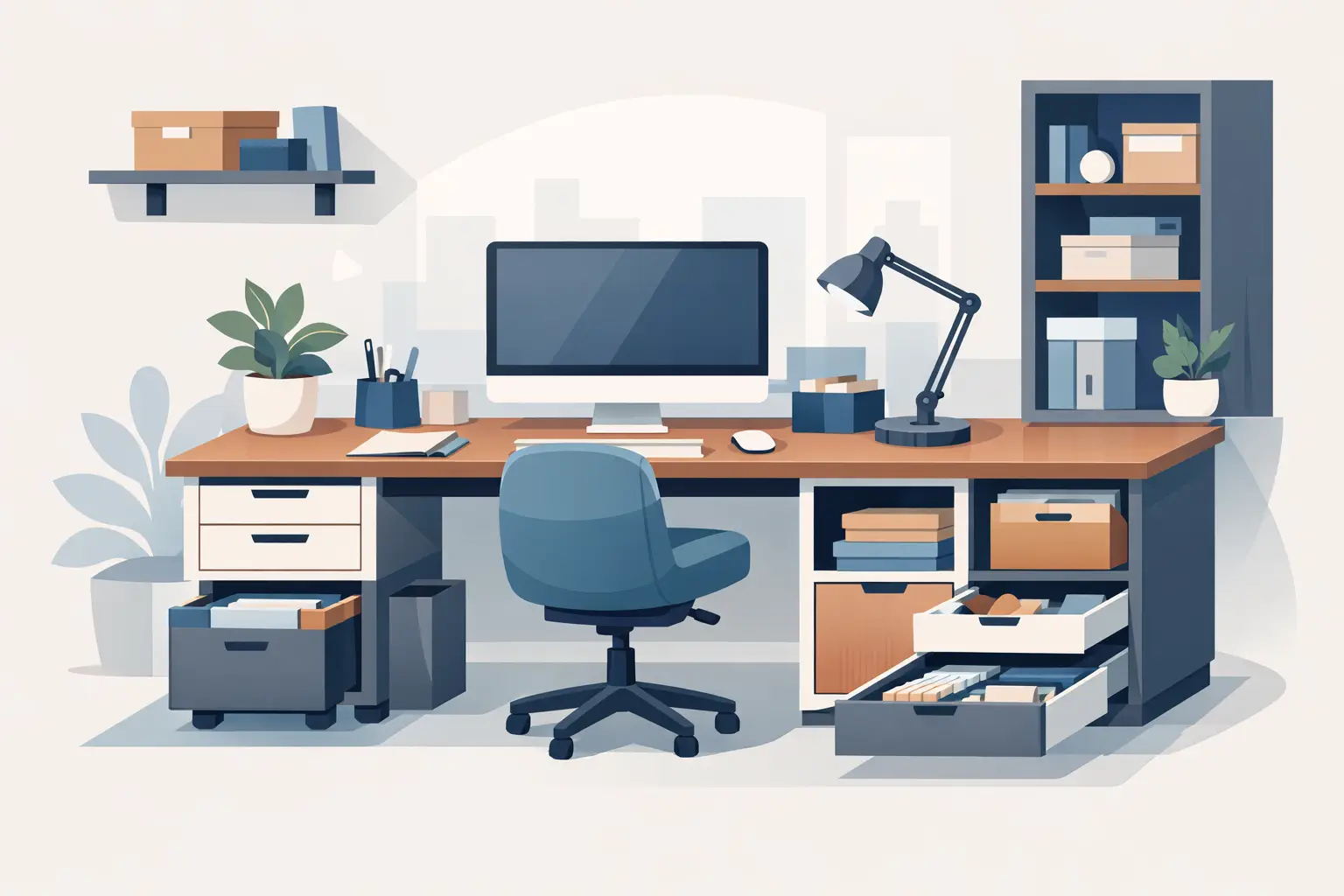
A desk can quickly become the busiest surface in the house. Between laptops, charging cables, school notes, bills and the occasional coffee cup, a clear workspace rarely stays clear for long. A home office desk with storage gives everyday work a proper place to happen, helping you stay organised without filling the room with separate drawers, shelves and filing cabinets.
Whether you are setting up a dedicated study, creating a work zone in the spare room or carving out a corner of the living area, the right desk should make your home feel more functional and more comfortable. The best choice is not always the biggest one. It is the one that suits the way you work, the room you have and the amount you need to store.
Why built-in storage makes a real difference
A desk with storage does more than hide away paperwork. It keeps the essentials within reach, so you are not constantly leaving your chair to find a charger, notebook or document. That small convenience can make a big difference when you are balancing work, family life and a busy household.
Storage also helps a shared space look more settled once the workday is done. If your desk sits in a bedroom, dining area or lounge room, drawers and cupboards make it easier to pack away the visual clutter. Your home can return to feeling like home rather than a permanent office.
The right amount of storage depends on your routine. Someone who mainly uses a laptop may only need a drawer for stationery and a shelf for a printer. If you manage household paperwork, run a business from home or support children with homework, a desk with deeper drawers and enclosed storage may be worth the extra floor space.
Choose a home office desk with storage for your space
Before looking at finishes or drawer styles, measure the area where the desk will sit. Take note of wall length, depth, skirting boards, power points and door clearance. It is also worth considering the room around the desk. You need enough space to pull out a chair comfortably and open drawers without bumping into a bed, wall or another piece of furniture.
A compact desk is often the smart choice in apartments, smaller homes and multipurpose rooms. Look for a narrow design with a drawer, cupboard or open shelf beneath the work surface. Vertical storage can be especially useful here, as it gives you more organisation without making the desk project too far into the room.
For a larger study or spare room, a wider desk with multiple drawers gives you room to spread out. A return-style or corner desk can also make excellent use of an awkward corner, creating separate zones for your computer, paperwork and printer. Just make sure the shape works with your preferred working hand and the location of power points.
Desk depth matters as much as desk width
A wide desk may look generous, but a shallow desktop can feel cramped once you add a monitor and keyboard. If you use a desktop computer, allow enough depth for a comfortable viewing distance and a clear area in front of the keyboard. Laptop users have more flexibility, though a little extra room for a notebook or second screen still makes daily tasks easier.
If the desk will be used for both work and study, choose a surface that can handle more than one job. A practical worktop gives you space for a laptop during the day and schoolbooks or craft projects later on.
Match the storage to what you actually use
The most useful desk is one with storage that suits your belongings, not just one with the highest number of compartments. Open shelves make frequently used items easy to grab, while drawers keep smaller pieces tidy and out of sight. Cupboards are helpful for larger items, including a printer, folders or a computer tower.
Think about your day before choosing a layout. Do you need to file documents, store stationery, charge devices or keep work materials away from curious little hands? A desk with a lockable drawer may be worthwhile for sensitive paperwork, while a cupboard door can make a shared living space look neater in seconds.
Consider these four common storage needs when comparing designs:
- Everyday stationery: shallow drawers for pens, notebooks, headphones and cables.
- Paperwork and files: deeper drawers or a cupboard that can accommodate folders.
- Technology: an open shelf or dedicated space with room for ventilation and cable access.
- Shared household use: closed storage that lets each person pack their items away at the end of the day.
Open shelving can make a desk feel lighter, particularly in a smaller room, but it asks you to keep things reasonably tidy. Closed drawers create a cleaner look and are better for hiding the less attractive parts of working from home, including tangled leads and piles of paper. Many households find a combination of both works best.
Find a style that belongs in your home
A home office should feel connected to the rest of your furniture rather than looking like an afterthought. Timber-look finishes bring warmth to bedrooms and family areas, while white desks can brighten a compact room and work beautifully with coastal, contemporary or Scandinavian-inspired interiors. Black or darker finishes offer a more defined, modern look and can be a practical choice where the desk gets frequent use.
The base and handles also change the overall feel. Clean lines and simple hardware suit modern homes, while a desk with a richer wood-look finish can soften a more traditional space. If your work area is visible from the lounge or dining table, choose a piece that complements nearby cabinets, shelves or dining furniture for a more cohesive result.
There is a trade-off between a minimalist look and maximum storage. A slim desk with a single drawer can feel airy, but it will not replace a filing cabinet. A larger desk with several drawers may offer better everyday function, especially for families, but it will have more visual weight. The goal is a balance that leaves the room comfortable to live in.
Do not overlook comfort and cable management
Storage is only one part of a practical office setup. The desk should be at a comfortable height for your chair, with enough room underneath for your legs to move freely. Avoid filling the under-desk area with bulky boxes if you spend long hours seated there.
Cable management deserves some thought too. A desk positioned near a power point is simpler to live with, and a back panel or open rear section can help keep cords less visible. Keep chargers and power boards accessible, but avoid overloading a drawer with cables that generate heat.
Your chair matters alongside the desk. Even a well-designed workstation will feel uncomfortable if the chair is too low, too high or does not provide the support you need. If possible, plan the desk and office chair as a pair, allowing enough clearance for armrests and easy movement.
Make a small home office feel more organised
A compact work area does not need to feel crowded. Start with the essentials and give each item a designated spot. Store daily items in the top drawer, keep infrequently used paperwork in lower storage and use open shelves only for things you are happy to see.
A small lamp, a simple desk organiser and one or two personal touches can make the space more inviting without reducing your working area. If you are working from a bedroom, placing a desk near natural light can help the room feel brighter, though avoid positioning your screen where glare becomes a problem.
For families, it can help to create clear desk rules. Allocate a drawer or shelf to each user, especially when the desk doubles as a homework station. This keeps school supplies from mixing with work documents and makes it easier for everyone to reset the space.
A practical investment for work, study and home life
A well-chosen desk can support much more than emails and video calls. It can become the place where household admin gets handled, kids complete assignments, plans are made and creative projects take shape. That is why quality construction, useful storage and a finish you enjoy seeing every day are all worth considering.
At Carlisle Furniture & Bedding, finding furniture for the whole home should feel straightforward, whether you are furnishing a new study or upgrading a small work corner. Choose a desk that fits your space now, while giving you enough flexibility for the way your household may use it tomorrow.
A tidy, comfortable workspace starts with furniture that earns its footprint. Measure carefully, be honest about what you need to store and choose a desk that helps the room work harder without losing its sense of home.