Choosing a new mattress can change far more than the look of your bedroom. It affects how comfortably you settle in, whether you wake when your partner moves, and how supported you feel by morning. When comparing foam versus pocket spring mattresses, the best choice is not simply about which option is better. It is about finding the feel, support and price point that suit the way you sleep.
For couples, growing families, first-home buyers and anyone replacing a tired mattress, both designs can offer excellent comfort. The difference comes down to how they are built and what that construction does for your body, your bedroom temperature and your everyday routine.
Foam versus pocket spring mattresses: the key difference
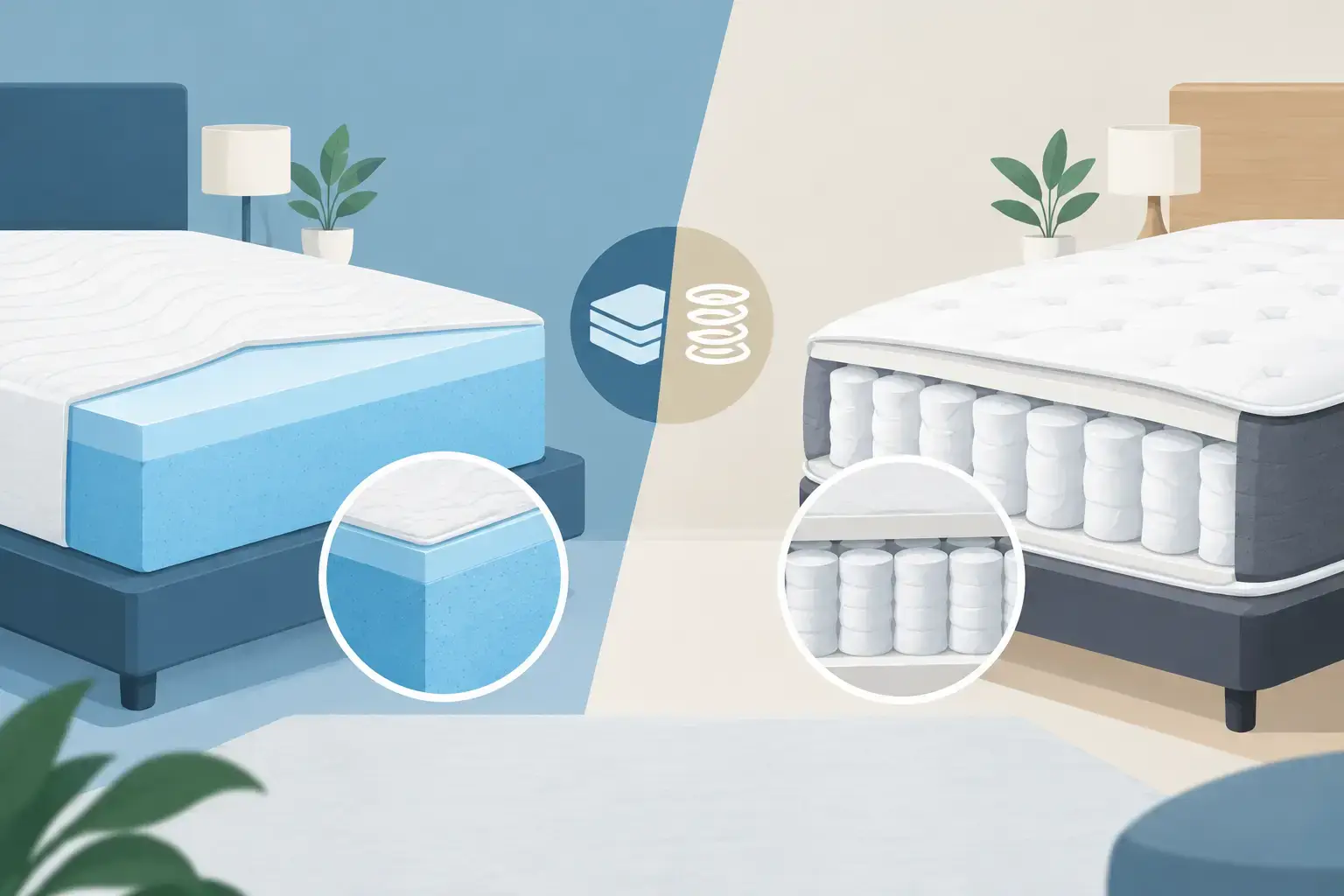
A foam mattress uses layers of foam to cushion and support the body. These can include memory foam, high-density support foam and responsive comfort foams. Rather than relying on coils, the mattress distributes your weight across its foam layers, creating a close, contoured feel.
A pocket spring mattress has hundreds of individual coils, with each spring wrapped in its own fabric pocket. Because the springs work separately, they can respond to pressure in specific areas rather than moving as one connected unit. Most pocket spring mattresses also include foam, fibre or quilted comfort layers on top, so they are not simply firm springs beneath a cover.
This means the choice is often between the enveloping, pressure-relieving sensation of foam and the buoyant, responsive support of individually pocketed springs. Neither is automatically right for every sleeper.
How each mattress feels
Foam offers close contouring comfort
Foam is known for its ability to mould around your shape. It can gently cushion the shoulders, hips and lower back, which many side sleepers find especially comfortable. Memory foam usually gives the deepest contouring sensation and may feel as though you are settling into the mattress, while more responsive foams make it easier to change positions.
That close fit can be appealing if you prefer a cosy, cradled feeling at bedtime. It can also help reduce pressure points for people who wake with sore shoulders or hips. However, some sleepers do not enjoy the slower response of dense memory foam, particularly if they move often during the night or prefer to feel more on top of the bed.
Pocket springs feel responsive and supported
Pocket spring mattresses generally have more bounce and a quicker response when you shift position. The independent springs provide support across the mattress while allowing the comfort layer to determine whether the overall feel is plush, medium or firm.
This makes pocket springs a popular option for combination sleepers who move from their side to their back or stomach overnight. Many people also like the familiar, lifted feel of a spring mattress, especially when getting in and out of bed. A well-designed pocket spring model can still feel beautifully cushioned, but it usually will not hug the body in quite the same way as deep foam.
Support is about more than firmness
A common mistake is assuming firm always means supportive. In reality, the right mattress should keep your spine in a comfortable, neutral position while cushioning the areas that take the most pressure. A mattress that is too firm can push against shoulders and hips, while one that is too soft may allow the hips to sink too far.
Foam mattresses can provide consistent support across the sleep surface, especially when they have a dense base layer beneath softer comfort foams. They can be a strong choice for sleepers who want even weight distribution and fewer pressure points.
Pocket springs provide support through individual coils, allowing different parts of the mattress to respond to the body. Quality designs often feature zoned support, with firmer springs through the centre where more support is commonly needed. This can suit people who like a more structured feel beneath their comfort layer.
Your body weight, preferred sleeping position and personal comfort preference all matter. A medium feel is often a versatile starting point for couples with different needs, but the label on a mattress is only a guide. What feels medium to one person may feel firm to another.
Movement, edge support and sharing a bed
If you share a bed with a partner, child or occasionally a pet, motion transfer is worth considering. Foam generally absorbs movement very effectively. When one person turns over or gets up early, the other person is less likely to feel the disturbance. This is one of foam’s strongest advantages for light sleepers.
Pocket springs can also perform well because each coil moves independently. A quality pocket spring mattress will transfer far less movement than an older-style connected spring mattress. Still, foam usually has the edge for maximum motion isolation, particularly in models with thicker memory foam layers.
Edge support varies from one mattress to another rather than simply from foam or spring construction. Pocket spring models often have reinforced edges that make the perimeter feel more stable when sitting to put on shoes or sleeping close to the side. Foam mattresses can also offer excellent edge support when built with denser foam around the border. If you use every centimetre of your mattress or have mobility concerns, test the edge in store rather than relying on a product category alone.
Which option sleeps cooler?
For many Australian homes, especially through a warm Victorian summer, temperature can be a deciding factor. Pocket spring mattresses naturally allow more airflow through the gaps around their coils. This can create a fresher, better-ventilated feel throughout the night.
Traditional memory foam can retain more body heat because it contours closely around you. That does not mean every foam mattress sleeps hot. Modern models may use gel-infused foam, open-cell structures or breathable covers to help manage warmth. Your bedding, bedroom ventilation and quilt choice also make a real difference.
If you regularly wake warm, a pocket spring mattress is often the simpler starting point. If you love foam’s pressure relief but are concerned about heat, look for a model designed with cooling materials and a breathable sleep surface.
Durability and value for a real household
The lifespan of a mattress depends on the quality of its materials, how often it is used, the foundation beneath it and how well it is cared for. A lower-priced mattress of either type may lose comfort sooner than a better-built option, so it pays to look beyond the headline price.
With foam, density is a useful quality indicator. Higher-density support foam generally holds its shape better over time, while the comfort layers affect the initial feel. With pocket springs, consider the overall construction, the quality of the comfort layers and whether the mattress has support features suited to your needs. A high spring count alone does not guarantee a better night’s sleep.
For value-conscious households, focus on the mattress that gives you the right combination of comfort and long-term support within your budget. A great mattress does not need to be the most expensive one in the showroom. It needs to suit your body, bed base and lifestyle.
Who should choose foam and who should choose pocket springs?
Foam may suit you if you are a light sleeper who notices your partner moving, you sleep mainly on your side, or you enjoy a close, pressure-relieving feel. It can also be a practical choice for an adjustable bed base, depending on the mattress design.
Pocket springs may suit you if you prefer easier movement, a more buoyant surface or stronger airflow. They are often a comfortable match for combination sleepers, warmer sleepers and people who value a stable edge.
There are exceptions. A plush pocket spring mattress can be ideal for a side sleeper, while a responsive foam model can work beautifully for someone who changes position often. Your individual comfort should lead the decision.
Test before you decide
When possible, lie on a mattress in your normal sleeping position for more than a few seconds. Give your shoulders and hips time to settle. If you are shopping as a couple, test it together and ask one person to move around while the other stays still. Notice whether you feel supported through your lower back, whether your shoulders feel cramped and whether changing position is easy.
At Carlisle Furniture & Bedding, it is worth comparing a few comfort levels side by side rather than choosing from a label alone. Consider the full bedroom setup too: a suitable bed base, breathable bedding and the right pillow can help your new mattress perform at its best.
The mattress you choose should make your bedroom feel like a proper place to rest, not another compromise in a busy home. Trust the construction, but trust your comfort even more. The right option is the one that helps you look forward to bedtime and wake ready for the day ahead.