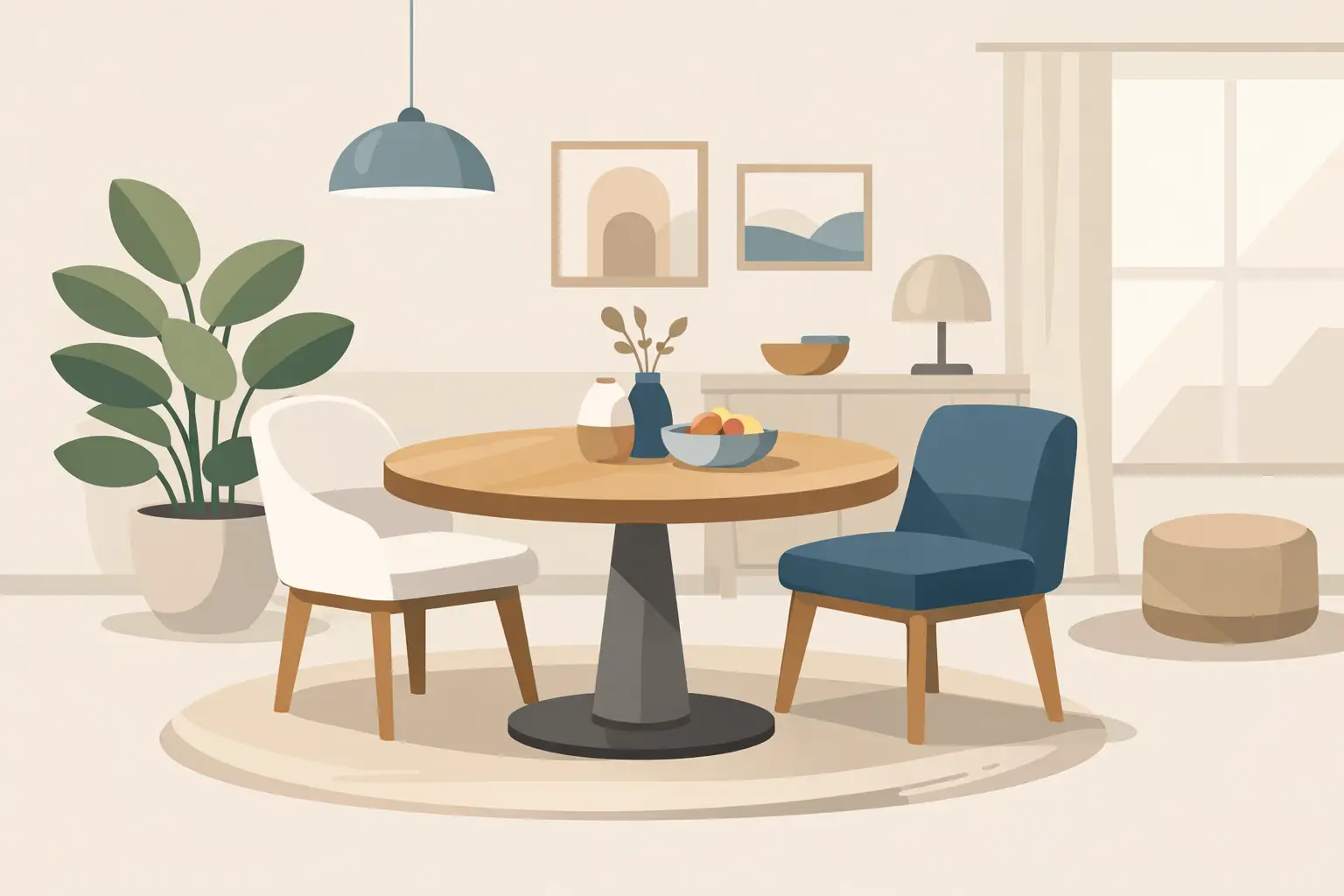
A dining area does not need a grand footprint to feel welcoming. The right round dining tables for small spaces can turn an unused corner, compact kitchen or open-plan nook into a comfortable place for quick breakfasts, family dinners and weekend catch-ups. Their curved shape keeps the room moving, softens hard lines and makes every centimetre work harder.
For apartments, townhouses and family homes where space is at a premium, a round table is often the smarter choice than a square or rectangular design. The key is choosing a size, base and finish that suits the way your household actually lives.
Why round tables work in compact dining areas
A round dining table has no sharp corners pushing into a walkway. That makes a noticeable difference in a narrow dining zone, especially when chairs need to be pulled out or people are passing through from the kitchen to the living room. The softer silhouette also helps a room feel less crowded than a boxy table of similar proportions.
Round tables are naturally sociable, too. Everyone faces towards the centre, which makes conversation easier whether you are sharing takeaway on a Friday night or sitting down for a proper family meal. There is no awkward person at the end of the table, and each seat feels equally part of the occasion.
Another practical benefit is flexible seating. A compact round table can usually accommodate an extra chair more easily than a square design, provided there is enough elbow room. This is useful for growing families, visiting grandparents or casual entertaining without committing to a permanently oversized dining setting.
Start with the space around the table
The table itself is only one part of the decision. Before shopping, measure the area where it will sit and consider the clearance needed for chairs, movement and nearby doors. As a comfortable guide, allow around 90 cm between the edge of the table and a wall, buffet or other furniture where possible. In tighter rooms, you may be able to work with a little less, but chairs should still slide back without blocking the path through the room.
Also look at how the space is used throughout the day. A table positioned near a hallway, kitchen island or sliding door needs more breathing room than one sitting in a dedicated dining nook. In an open-plan home, a round table can be especially effective because it creates a distinct dining zone without making the overall room feel divided.
If you are furnishing a rental, use masking tape on the floor to mark the table diameter and chair positions. It is a simple way to see whether the size looks generous, cramped or just right before you buy.
Choose the right diameter for your household
For one or two people, a table around 90 cm to 100 cm in diameter can be a comfortable everyday option. It gives you enough surface for place settings, serving dishes and a centrepiece without taking over a compact kitchen or apartment dining area.
A 105 cm to 120 cm round table is a popular middle ground for four people. This size works well for couples who enjoy having friends over, young families or anyone wanting a dining setting that feels practical every day but still ready for guests.
If you regularly seat five or six, consider a larger round table only if the room can support it. A generous tabletop may technically fit, but it will not feel enjoyable if every chair is pressed against a wall. In a smaller home, an extendable design can offer the best of both worlds: a compact round setting for daily living and extra room when visitors arrive.
The best base for round dining tables for small spaces
The base affects comfort more than many shoppers expect. A pedestal base is often an excellent choice for a compact dining room because it removes the corner legs that can get in the way of chairs and knees. It also makes it easier to add an occasional extra seat when needed.
Four-legged round tables can still work beautifully, particularly in timber styles that bring warmth and character to the home. Just check where the legs sit in relation to your dining chairs. If the base is too wide, it may limit where people can sit or make the setting feel less flexible.
For busy family homes, look for a solid, stable base with a balanced weight. A smaller table should still feel secure when children lean on it, someone places down a heavy serving platter or the table is used for homework and craft projects. Comfort is not only about how a setting looks – it is about how confidently it handles everyday life.
Match the material to your lifestyle
Timber or timber-look finishes are a dependable option for Australian homes. They add warmth, suit coastal, contemporary and classic interiors, and pair easily with different chair styles as your taste changes. A light oak-look finish can help a tight dining area feel brighter, while deeper timber tones can create a cosy, grounded look in an open-plan space.
A round glass dining table can visually reduce bulk because you can see through the surface. It can be a smart choice for a small room with limited natural light, but it does need regular cleaning if fingerprints and smudges will bother you. For households with young children, a durable timber-look, ceramic-look or easy-care surface may be the more relaxed option.
Marble-look tops bring a polished, design-led finish without requiring a formal dining room. They can look striking with upholstered chairs, black metal details or soft neutral rugs. As with any statement piece, keep the surrounding furniture balanced so the dining nook feels styled rather than busy.
Pair your table with chairs that do not crowd the room
The most beautiful table will not solve a cramped dining area if the chairs are too wide, too heavy or difficult to move. Choose chairs with a slim profile, a low back or open-frame detailing when you want to maintain a lighter visual feel. Chairs that tuck neatly beneath the tabletop are particularly helpful in tight spaces.
That does not mean sacrificing comfort. Upholstered dining chairs can make a small dining area feel more inviting and encourage people to linger after a meal. Look for supportive seating with an easy-care fabric or finish that suits your household. If your dining table is also used for work or study, seat comfort becomes even more valuable.
For a flexible arrangement, consider a mix of chairs and a dining bench where the layout allows it. A bench can slide under the table or against a wall when not in use, though it is usually best suited to one side of the setting rather than all the way around a round table.
Use shape and colour to make the area feel bigger
Round furniture works especially well when a room has plenty of straight lines: rectangular kitchen cabinetry, a long sofa, floating shelves or large windows. The curve offers contrast and makes the layout feel more considered. A round rug beneath the table can reinforce this effect, although it needs to be large enough for chairs to stay on the rug when pulled out.
Lighter finishes tend to make compact rooms feel more open, while a darker table can give a larger open-plan space a strong focal point. Neither is automatically better. If your room receives plenty of daylight and has pale walls, a darker timber table can add welcome depth. In a dimmer corner, lighter wood, soft beige upholstery or a glass top may help lift the area.
Keep styling simple. A low bowl, a small vase or a single arrangement of greenery gives the table personality without competing with daily meals, school bags or the practical items that often land there. A compact dining space feels more generous when it has room to be used, not just admired.
Make your dining setting work beyond mealtimes
In many homes, the dining table is one of the hardest-working pieces of furniture. It may be a morning coffee spot, a homework station, a work-from-home desk and the place where everyone gathers at the end of the day. Choosing a table with an easy-clean, durable surface makes this shared use far more enjoyable.
Consider storage nearby as part of the overall solution. A slim sideboard, small buffet or shelving unit can hold placemats, servingware and paperwork, keeping the tabletop clear. If space is very limited, select a table that provides enough room for daily use rather than buying larger for the occasional dinner party. A comfortable home is built around your normal routine, not just the rare big occasion.
At Carlisle Furniture & Bedding, a well-chosen dining setting is about more than fitting furniture into a room. It is about creating a comfortable place to connect, eat and enjoy everyday life. Measure carefully, choose seating that feels good, and let the round shape bring a little more ease to the way your home works.