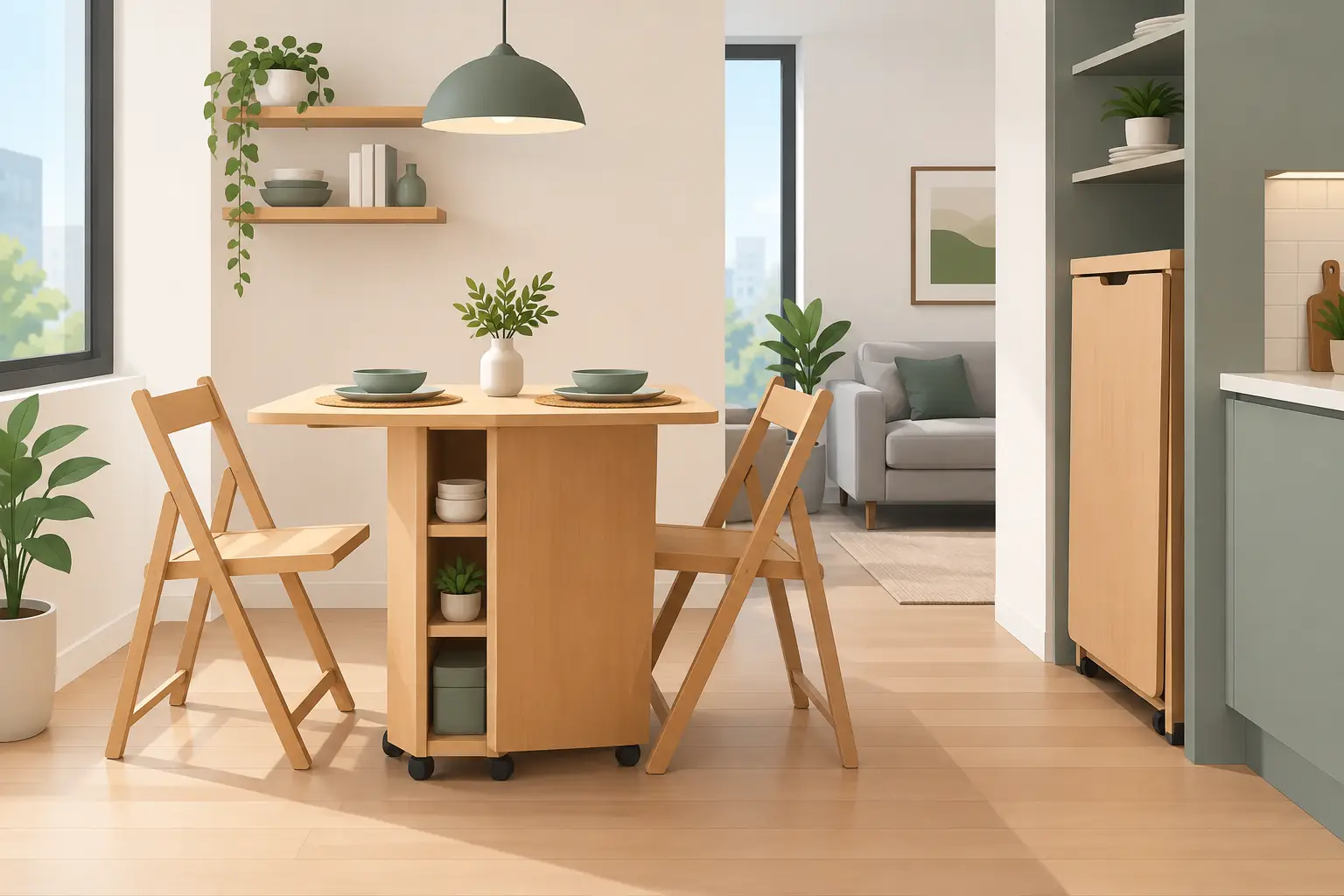
A dining area does more than hold plates at dinner time. It becomes the spot for school projects, work-from-home emails, Saturday coffees and big family meals that stretch well past dessert. The right space saving dining furniture lets you enjoy all of that without making a compact room feel crowded or hard to move through.
For apartments, townhouses, units and smaller family homes, the goal is not simply to buy the smallest table available. It is to choose pieces that suit how your household genuinely lives, look at home with the rest of your furniture and earn their place every day.
Start with the room, not the number of seats
A dining setting can look perfectly proportioned in a showroom or online image, then take over a room once it is in place. Before choosing a table, measure the usable dining zone rather than the room’s full dimensions. Account for doors, walkways, cabinetry, the path to the kitchen and furniture that cannot be moved.
As a practical guide, try to leave around 90 cm behind chairs where possible. This allows people to sit down, stand up and move around the table comfortably. If your dining area doubles as a thoroughfare, that clearance matters more than squeezing in one extra chair.
Think about your usual day first. A couple who entertain once a month will have different needs from a family of five using the table for every meal and homework session. A compact four-seat table may be ideal for daily living, while an extendable design gives you extra room when grandparents or friends come over.
The best space saving dining furniture designs
Small-space furniture works best when it is deliberately designed for flexibility, storage or improved flow. These are not compromises on comfort or style. They are practical choices that help a home feel more open and organised.
Extendable dining tables
An extendable dining table is one of the most useful options for homes where space is limited but entertaining still matters. Kept closed, it gives you a neat everyday surface. Open it up, and there is room for extra place settings without permanently dedicating floor space to a larger table.
Look at how the extension works before you buy. Butterfly leaves are conveniently stored within some tables, while separate leaves need a safe storage spot in a cupboard or spare room. Also consider the table’s extended length and check that chairs can still sit comfortably around it.
Round extendable tables can be especially effective in tighter rooms because they soften the visual bulk of the setting and remove sharp corners from busy walkways. Rectangular designs often make better use of a narrow dining space or wall-adjacent layout.
Drop-leaf and folding tables
Drop-leaf tables are made for flexible, everyday living. With both sides down, the table can sit close to a wall or act as a slim console. Raise one side for a quick meal, or both when guests arrive.
This style suits renters, first-home buyers and anyone furnishing a multipurpose room. The trade-off is that some folding designs are less substantial than a fixed table, so pay attention to the leg structure, locking mechanism and top thickness. A well-made folding table should feel secure, not temporary.
Nesting tables and compact dining sets
For very small dining zones, a compact table paired with neatly proportioned chairs can make a major difference. Dining chairs that slide completely beneath the table keep sightlines clear and stop a room from feeling cluttered.
Nesting stools or benches can be useful too. They tuck away easily when not needed and can be pulled out for visiting family. A bench is particularly practical along a wall, where individual chairs may take up more visual and physical space. Just make sure everyone using it will find it comfortable for longer meals.
Dining tables with built-in storage
Storage dining furniture can reduce the need for a separate sideboard in a compact home. Some tables include drawers, shelves or a central base with space for placemats, napkins and serving pieces. This keeps everyday essentials close without filling benchtops or cupboards.
Storage should never come at the cost of leg room. Sit at the table, or check the dimensions carefully, to ensure drawers and shelves do not interfere with where chairs need to go. A pedestal base is often a smart alternative in small spaces because it removes table legs from the corners and makes seating more flexible.
Choose chairs that keep the room feeling open
Dining chairs are often where a compact setting becomes bulky. High, heavily upholstered designs can be wonderfully comfortable, but four or six of them may dominate a small room. That does not mean you need to settle for hard or flimsy seating. It means matching the chair profile to the available space.
Open-back chairs, slender timber frames and upholstered seats with a lower visual profile allow more light and sightlines through the room. They can still feel warm and inviting, particularly when paired with a timber-look or natural-toned table.
If comfort is your top priority, consider using two more substantial chairs at the heads of the table and lighter chairs along the sides. This creates a balanced look while giving the setting a more relaxed, family-friendly feel. Stackable chairs can also work well for occasional guests, provided they are comfortable enough to use when everyone stays for coffee.
Use shape and colour to create more breathing room
Furniture size matters, but visual weight matters too. A pale timber finish, glass-look top or light neutral upholstery can make a dining area appear more open than a dark, solid setting of the same dimensions. This is not a rule that says small rooms cannot have darker furniture. A rich walnut or black dining table can look striking in a compact home, especially when the surrounding walls and floor are lighter.
Round tables are a strong choice where people need to move past the dining area regularly. Their curved edge improves the flow around the setting and encourages conversation. Square tables suit compact square rooms, while narrow rectangular tables are often best for open-plan areas with a defined dining strip.
If your dining space is open to the living room, choose finishes that connect with nearby furniture. Repeating a timber tone, black metal detail or fabric colour helps the whole area feel intentional rather than crowded with separate pieces.
Avoid the common small-dining mistakes
Buying solely by seat count is the biggest mistake. A six-seat table is not necessarily better value if it blocks the kitchen path and stays uncomfortable to use. It is often smarter to buy a refined four-seat setting with an extension option than a permanently oversized table.
Another common issue is forgetting the table’s working space. A table may fit against a wall, but will the person seated there be able to get in and out? Similarly, a bench may save space on paper but be inconvenient if it needs to be pulled out every time someone sits down.
Finally, avoid filling every spare corner with storage. A slim buffet or display cabinet can be useful, but a little empty floor space gives a room a calmer, more generous feel. Choose storage pieces that serve a clear purpose, rather than adding furniture simply because there is a gap.
Make a compact dining zone work harder
A smaller dining area benefits from a few considered finishing touches. A pendant light centred above the table visually anchors the zone, while a rug can define it in an open-plan home. Choose a rug large enough that chairs stay on it when pulled out, otherwise it can become a trip hazard and make the room feel disjointed.
A wall mirror can brighten a darker dining nook by reflecting natural light, and a simple centrepiece keeps the table welcoming without taking away its practical workspace. If the table does duty as a desk, use a tray or basket to gather chargers, papers and stationery at the end of the day.
At Carlisle Furniture & Bedding, the best dining setting is the one that brings people together comfortably while fitting the way your home works. Measure carefully, choose flexibility where it counts and leave enough room to move – your dining space will feel more generous from the very first meal.