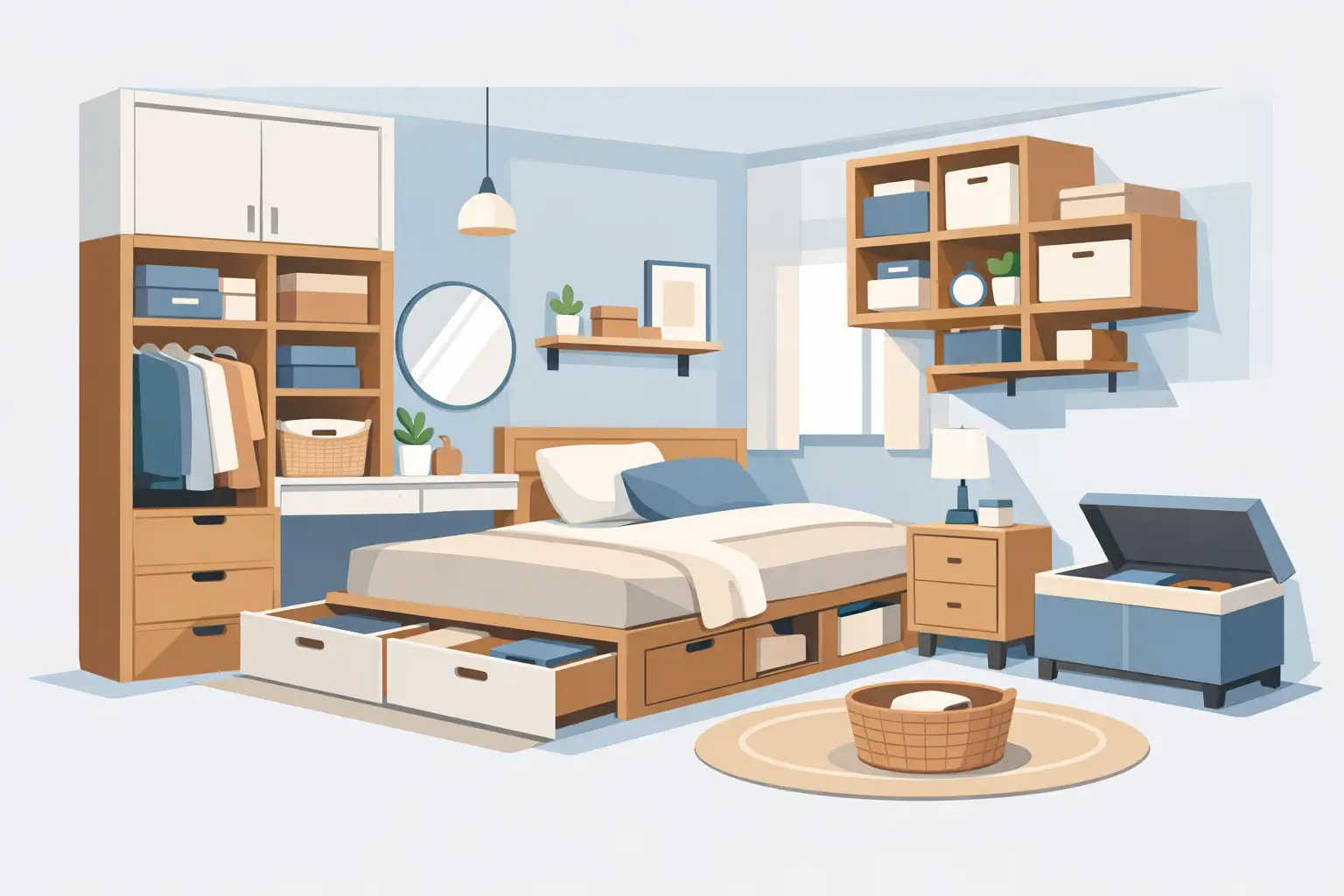
A small bedroom can feel crowded surprisingly quickly. One overflowing bedside table, a wardrobe with nowhere for shoes, and a chair collecting clothes can turn a place meant for rest into a daily frustration. The right storage furniture for small bedrooms changes that equation, giving every essential a home without making the room feel closed in.
The goal is not to fill every spare centimetre with cabinetry. It is to choose a few hardworking pieces that suit how you actually live: where you get dressed, where spare linen goes, how much hanging space you need, and whether the room needs to work for one person, a couple or growing kids. With thoughtful proportions and a coordinated look, even a compact bedroom can become a calm, comfortable sanctuary.
Start With the Space You Can Keep Clear
Before choosing furniture, measure more than the room itself. Note the door swing, windows, power points, wardrobe doors and the clear path needed around the bed. A bed that looks modest in a showroom can dominate a tight room once bedside tables and drawers are added.
As a practical guide, try to retain a comfortable walkway beside the bed and enough room to open drawers fully. If a chest of drawers blocks the path when open, it will become inconvenient very quickly. In that situation, a taller, narrower design or a wardrobe with built-in drawers may be the better fit.
It also helps to decide what must stay in the bedroom. Everyday clothes, sleepwear, spare bedding and a few personal items generally belong there. Seasonal clothes, bulky suitcases and rarely used items may be better stored elsewhere in the home. Good storage is not only about capacity – it is about making the items you use most easy to reach.
The Best Storage Furniture for Small Bedrooms
Choose a bed that does more
The bed takes up the largest footprint in the room, so it is the smartest place to add storage without claiming more floor space. A gas-lift storage bed gives access to the full area beneath the mattress and is particularly useful for doonas, spare pillows, winter clothing and luggage. Because the base lifts rather than pulls out, it can work well where there is limited clearance at the sides of the bed.
Beds with built-in drawers are another practical option. They keep items divided and accessible, which suits folded linen or everyday clothing. The trade-off is that drawers need room to open, so they are best for bedrooms with clear space around the sides or foot of the bed. If your bed sits close to a wall, a gas-lift base will usually make better use of the available area.
Consider the visual weight, too. A storage bed with a simple upholstered headboard or clean timber-look finish can feel lighter than a bulky frame with heavy detailing. Choosing one piece that combines comfort, style and storage often means you can skip an extra storage trunk or under-bed tubs altogether.
Make the wardrobe work harder
A wardrobe is not just a place to hang clothes. In a small bedroom, it should handle as many categories as possible behind one tidy front. Look for a combination of hanging rails, shelves and drawers so dresses, shirts, folded clothes and smaller items are not competing for the same space.
Sliding wardrobe doors are useful when there is not enough room for doors to swing open. Hinged doors, however, can give a clearer view of the whole interior and often make it easier to access corners. Neither style is automatically better – the right choice depends on the room layout and where the bed sits.
Mirrored doors can also be a clever option in compact rooms. They provide a dressing mirror without needing another wall-mounted piece and reflect natural light to create a more open feel. For a shared bedroom, consider a wider wardrobe with separate zones from the start. A little structure makes busy mornings easier and keeps one person’s belongings from spilling into the other’s space.
Go vertical with a tallboy or chest of drawers
When floor area is limited, height becomes valuable. A tallboy offers generous drawer storage within a narrow footprint, making it a strong choice beside a wardrobe, near the door or on a short wall that cannot accommodate a wide dresser.
A low chest of drawers can be equally useful if it doubles as a display surface for a lamp, jewellery box or framed family photo. It may also sit neatly beneath a window, provided it does not interfere with curtains or access. Choose deeper drawers for jumpers, towels and linen, while shallower top drawers are ideal for smaller clothing and everyday essentials.
Try not to mix too many unrelated drawer units into one room. A bed base, wardrobe and tallboy from a coordinated bedroom collection will look more intentional and help the room feel less busy. Matching finishes are not essential, but keeping to a consistent timber tone, handle style or colour palette creates a more settled result.
Select bedside tables with purpose
Bedside tables are small, but they are often the first place clutter builds up. A design with at least one drawer gives mobiles, charging cords, reading glasses and medications a place to disappear at night. An open shelf below can hold books or a basket, though it will need occasional tidying to keep the room looking calm.
If there is only room for one bedside table, that is completely fine. Balance the other side with a wall-mounted light, a slim shelf or simply leave it open for easier movement. In a compact bedroom, clear space can look as valuable as furniture.
Use Storage That Suits Your Routine
The most attractive bedroom suite will not solve a storage problem if the internal layout fights your habits. Think about what you reach for during a normal week. If you fold most clothes, prioritise drawers and shelves. If you wear work shirts, dresses or jackets, make sure there is enough hanging height. If changing sheets feels like a scramble, store linen close to the bed rather than in a distant cupboard.
Families may need storage that adapts as children grow. A sturdy tallboy can move from a nursery to a teenager’s room, while a storage bed remains useful long after toy boxes are no longer needed. Renters may prefer versatile pieces that can work in a future home with a different layout. In both cases, classic finishes and practical proportions offer more flexibility than highly specialised furniture.
It is also worth considering access. Storage beneath a heavy mattress may be perfect for seasonal items but less convenient for things you need every day. Keep frequently used belongings in drawers and wardrobe shelves, then reserve deeper or harder-to-reach storage for items used less often.
Make a Small Bedroom Feel More Open
Storage furniture should reduce visual clutter as well as physical clutter. Closed drawers and doors are generally better than open shelving when the room is already tight, because they hide the uneven shapes and colours of clothing, cords and personal items. A few open spaces can add character, but too many can make the room feel like a storeroom.
Lighter timber finishes, soft neutral upholstery and furniture raised on legs can help create a less crowded look. This does not mean every small bedroom needs white furniture. Darker colours can look warm and sophisticated, particularly when balanced with pale bedding, good lighting and simpler silhouettes.
Scale matters more than matching every piece exactly. A slim tallboy, compact bedside tables and a bed with hidden storage will often feel more generous than oversized furniture with extra decorative bulk. Choose pieces that earn their place, then let the room breathe around them.
Plan a Bedroom Set, Not a Collection of Extras
Buying storage furniture one item at a time can seem easier on the day, but it often leads to mismatched heights, cramped walkways and purchases that duplicate the same job. Start with the bed and wardrobe, then add the drawer storage and bedside pieces the room genuinely needs.
At Carlisle Furniture & Bedding, considering complete bedroom solutions can make this planning simpler. Seeing how a bed, tallboy, bedside tables and wardrobe work together helps you create a cohesive look while choosing storage that suits your budget and available space. Delivery options and flexible payment choices can also make a larger bedroom refresh more manageable.
The best small-bedroom setup is not the one with the most cupboards. It is the one that gives you a clear floor, an easy morning routine and a bedroom that feels ready to switch off at the end of the day.