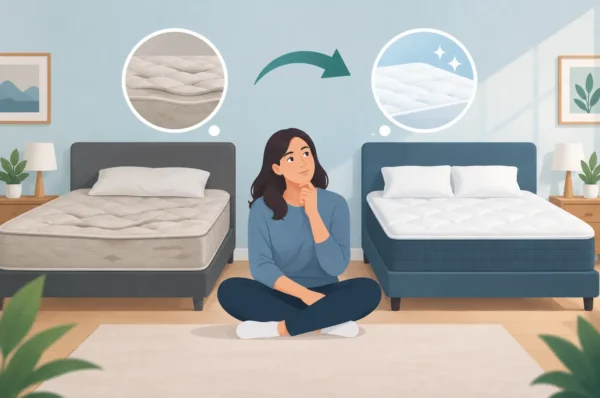
A mattress can look great in the showroom, then feel completely different after a few nights at home. That is why the hybrid vs innerspring decision comes down to more than price or how plush the top feels when you first sit on it. The right choice should suit how you sleep, who you share the bed with and the level of support you want at the end of a busy day.
Both mattress types use springs, but they create a noticeably different sleep experience. Innerspring mattresses are a familiar, practical choice with a responsive feel and often sharper value. Hybrid mattresses pair a spring base with deeper comfort layers, offering a more cushioned and contemporary feel. Neither is automatically better. The best mattress is the one that helps you wake up comfortable, supported and ready for the day.
Hybrid vs innerspring: the key difference
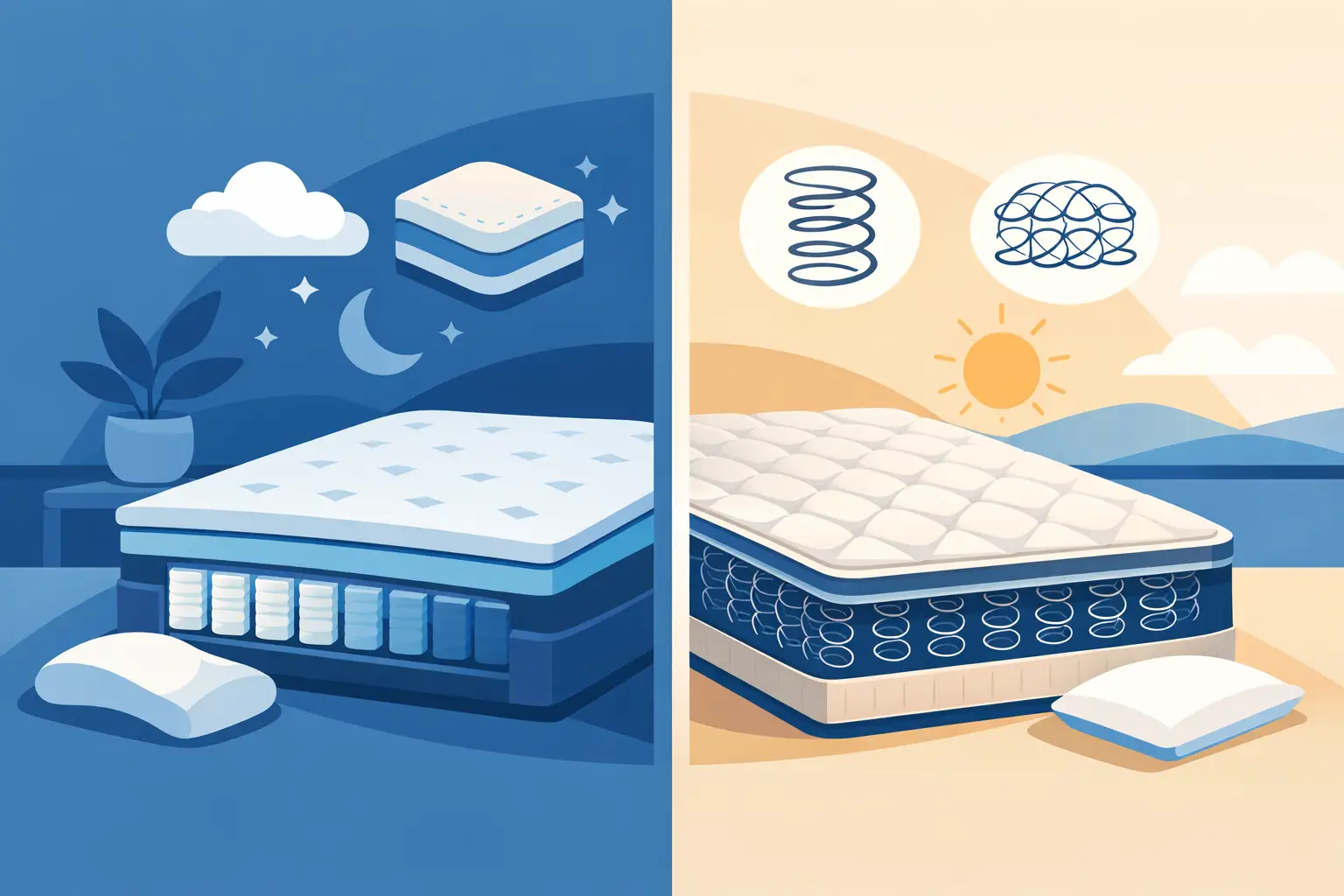
An innerspring mattress is built around a spring system, usually with a thinner comfort layer on top. The springs do most of the work, providing structure, lift and airflow. Depending on the model, you may find connected springs or individually wrapped pocket springs. It generally feels buoyant and responsive, making it easy to change positions or get in and out of bed.
A hybrid mattress also has a spring core, most commonly pocket springs, but adds more substantial layers of foam, latex or other cushioning materials above it. Those extra layers soften the initial feel and spread pressure more evenly across the body. Think of it as the balance between the support and airflow of a spring mattress and the contouring comfort often associated with foam.
For many shoppers, the simplest distinction is this: innerspring mattresses tend to feel firmer, more direct and more traditional, while hybrids usually feel more cushioned and pressure-relieving.
Why an innerspring mattress may suit your home
An innerspring mattress can be an excellent option when you want dependable support without stretching the bedroom budget. It is particularly appealing for guest rooms, teenagers’ rooms, first homes and households furnishing several bedrooms at once. A quality spring mattress can deliver a comfortable night’s sleep while leaving more room in the budget for a new bed frame, bedside tables or storage pieces.
The natural airflow through a spring system is another advantage. If you tend to sleep warm, a more traditional innerspring design can feel less heat-trapping than a mattress with thick foam layers. The responsive surface also suits sleepers who dislike the sensation of sinking into a bed. Combination sleepers, who move from their side to their back or stomach overnight, often appreciate how easily they can shift position.
An innerspring can be a sensible pick if you prefer a firmer feel. Stomach sleepers may find this especially helpful, as a flatter, supportive surface can help prevent the hips from dropping too far into the mattress. Back sleepers who want a supportive, no-fuss feel may also be very comfortable on the right innerspring model.
There are trade-offs. Basic innerspring designs may transfer more movement across the bed than a hybrid with pocket springs and thick comfort layers. If one person is a light sleeper and the other tosses and turns, that movement can be noticeable. A thinner comfort layer can also feel less forgiving around the shoulders and hips for some side sleepers.
When a hybrid mattress is worth considering
Hybrid mattresses are designed for people who want support without giving up cushioning. The spring base keeps the mattress stable and breathable, while the comfort layers create a gentler surface that can better accommodate pressure points. This is why hybrids are often a strong all-round choice for couples and for people who sleep in more than one position.
Side sleepers commonly enjoy the extra contouring around the shoulder and hip. A good hybrid can let these areas settle slightly while still supporting the waist and lower back. The goal is not to sink deeply into the mattress, but to keep your spine in a more natural alignment.
Hybrids can also be a good fit for couples with different comfort preferences. The added comfort layers soften the spring feel, while pocket springs can respond more independently under each sleeper. This may reduce disturbance when someone gets up early, comes to bed late or changes position through the night.
The extra materials usually mean a hybrid costs more than a comparable basic innerspring mattress. It can also be heavier to move, which matters if you are carrying it up stairs, rearranging a bedroom or setting up a new home. Some hybrids with very thick foam comfort layers may retain more warmth, although breathable covers, gel-infused foams and well-designed spring systems can help manage this.
Match the mattress to your sleeping position
Sleeping position is a useful starting point, but it should not replace trying the mattress for yourself. Body weight, comfort preferences and existing aches all affect what feels supportive.
Side sleepers
Side sleepers usually need more cushioning at the shoulder and hip than back or stomach sleepers. A medium to medium-plush hybrid is often a comfortable place to start because it can relieve pressure while maintaining support underneath. An innerspring can still work well, particularly if it has a quality quilted top, but a very firm or thin-topped design may feel hard on the shoulder.
Back sleepers
Back sleepers often do well with medium or medium-firm support. Both mattress types can be suitable. Choose an innerspring if you like a firmer, lifted feel, or consider a hybrid if you want a little more cushioning around the lower back without losing stability.
Stomach sleepers
Stomach sleepers generally benefit from a firmer surface that keeps the hips from sinking. A firm innerspring or firmer hybrid can work well. Avoid choosing something overly plush simply because it feels luxurious in the first minute. Too much softness may leave your midsection unsupported over a full night.
Combination sleepers
If you move frequently, look for responsiveness. Innersprings are naturally easy to move on, while a medium hybrid with pocket springs can offer a comfortable compromise between pressure relief and mobility. Very soft, slow-moving foam layers may not suit everyone who changes position often.
Consider your bed base and bedroom setup
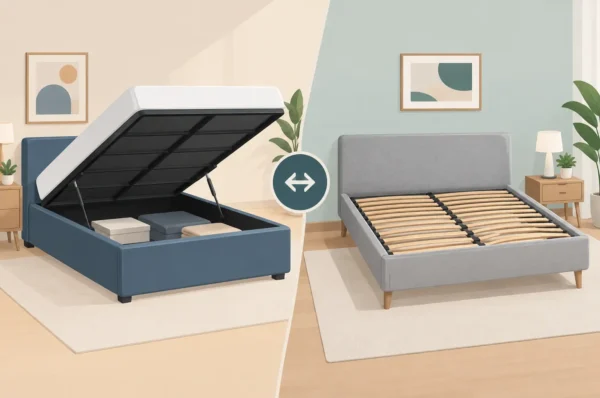
Before choosing between hybrid and innerspring, check what is underneath the mattress. A sturdy, well-supported base helps any mattress perform as intended. Slats should be in good condition and close enough together to support the mattress evenly. If your existing base is sagging, even the best new mattress may not feel right.
Also think about mattress height. Hybrids are often thicker than standard innerspring models, which can change how high your bed sits and whether your fitted sheets still fit comfortably. This can be especially relevant for children, older family members or anyone who prefers a lower bed for easier access.
For a guest bedroom, an innerspring can offer excellent everyday value and a familiar feel for a range of visitors. For your main bedroom, where sleep quality matters night after night, a hybrid may be worth the additional spend if you want deeper comfort, reduced partner disturbance or better pressure relief.
How to shop without second-guessing your choice
Start by deciding what you want to change about your current mattress. If you wake feeling pressure at your hips or shoulders, prioritise cushioning. If your mattress feels too soft or leaves your back unsupported, focus on stronger support and a firmer feel. If heat is the issue, look closely at spring construction and breathable materials rather than assuming every foam-topped mattress will sleep the same.
When trying mattresses in store, lie down in your normal sleeping position for more than a few seconds. Give your shoulders, hips and lower back time to settle. If you share a bed, test it together where possible. One person can change position or get off the mattress while the other notices how much movement travels across the surface.
It also helps to consider the whole bedroom purchase. A supportive mattress paired with the right bed frame, pillows and bedding can make the room feel like a genuine sanctuary, not just a place to sleep. Carlisle Furniture & Bedding offers options for creating a comfortable, stylish bedroom without needing to shop room by room at different stores.
There is no need to choose based on trends alone. If you love a cool, responsive, firmer sleep surface and want strong value, an innerspring mattress may be exactly right. If you want spring support with a more cushioned feel for pressure points and shared sleeping, a hybrid could be the better fit. Take your time, trust what feels comfortable to your body, and choose the mattress that makes bedtime something to look forward to.