A bed can look perfect in a showroom or online, then feel far too large once it is in the room. Knowing how to measure a bed base before you buy helps you avoid cramped walkways, a mattress that does not sit correctly, and delivery-day surprises. A few careful measurements now can make all the difference to how comfortable, practical and inviting your bedroom feels.
Whether you are furnishing a first home, updating the family bedroom or creating a guest room sanctuary, measure the bed base itself as well as the available space around it. The mattress size is only one part of the picture.
How to Measure a Bed Base Correctly
Use a tape measure, not an estimate based on floorboards, tiles or your current mattress. Measure in millimetres where possible, as furniture product dimensions are usually listed in millimetres. Record every figure on your mobile or a note pad before comparing it with the bed base dimensions.
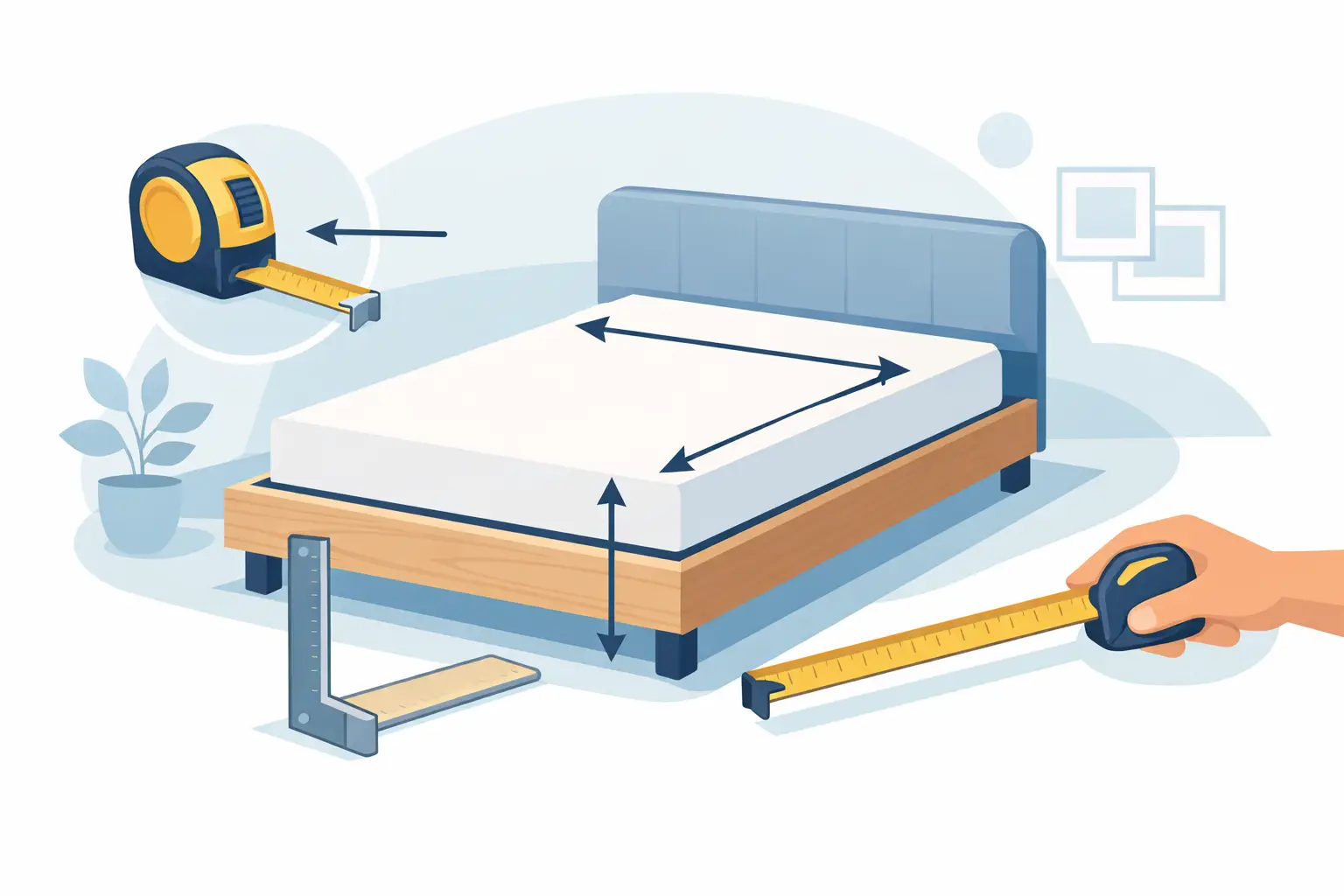
A bed base has three main measurements: width, length and height. Measure from the widest point on each side, including any upholstered edges, timber rails or protruding hardware. For length, measure from the very front of the foot-end to the furthest point at the headboard. If the headboard curves, slopes or extends beyond the frame, include that extension.
Height needs a little more thought. Measure from the floor to the top of the bed base, then allow for the height of your mattress. A tall base and deep mattress can create a luxurious hotel-style look, but it may not suit a smaller room or someone who finds a lower bed easier to get in and out of.
Measure the internal mattress area too
The outside dimensions of a bed base tell you whether it will fit in the room. The internal dimensions tell you whether your mattress will fit properly.
Measure the inside width and length where the mattress sits, especially on a timber or metal frame with side rails. Also measure the depth of the recessed mattress area, sometimes called the mattress ledge. A shallow ledge may leave more of the mattress visible above the frame, while a deeper ledge can make a mattress sit lower and feel more contained.
Ideally, the internal space should closely match your mattress dimensions without squeezing the sides. A mattress that is too tight can be difficult to fit and may not sit flat. One that is too loose can shift over time, particularly on a smooth platform base.
Start With Your Mattress Size
If you already own a mattress, measure it before choosing a new base. Standard Australian mattress sizes are useful as a guide, but actual dimensions can vary slightly between brands and mattress styles. Pillow-top and edge-to-edge designs can also be a little wider or longer than expected.
As a general guide, common Australian mattress sizes are:
- Single: approximately 920 mm wide by 1880 mm long
- King single: approximately 1070 mm wide by 2030 mm long
- Double: approximately 1380 mm wide by 1880 mm long
- Queen: approximately 1530 mm wide by 2030 mm long
- King: approximately 1830 mm wide by 2030 mm long
Do not assume a queen mattress will fit every queen bed base in exactly the same way. Product specifications are the best guide, and measuring your existing mattress gives you extra peace of mind. This matters most if you are pairing a mattress from one collection with a bed frame from another.
A bed base can also be noticeably larger than its mattress. Upholstered winged headboards, wide timber surrounds and storage drawers all add to the overall footprint. That extra width may be worth it for the style or storage you want, but it needs to work with your room.
Measure the Bedroom, Not Just the Wall
The biggest measuring mistake is checking whether a bed fits between two walls, then forgetting the room still needs to function around it. Bedrooms need comfortable access to wardrobes, drawers, doors and both sides of the bed where possible.
Mark the proposed bed base footprint on the floor using masking tape. This simple step makes the scale much easier to see than numbers on a page. Walk around the outline, open the bedroom door and wardrobe doors, and picture making the bed, changing sheets or carrying a laundry basket through the space.
Aim for practical clearances rather than filling every spare centimetre. Around 600 mm beside the bed is comfortable for everyday access, although smaller rooms may require compromise. If two people use the bed, access on both sides is usually worth prioritising. In a guest room, against-the-wall placement may be fine and can free up valuable floor space.
At the foot of the bed, leave enough room to open drawers, walk past the frame and use any storage furniture. A blanket box, low dresser or television unit may look balanced opposite the bed, but only if it does not create a tight passage.
Account for doors, windows and power points
Measure with doors fully open. This includes the bedroom door, ensuite door, wardrobe doors and drawers in nearby furniture. A bed base that looks as though it fits can block a door swing by only a few centimetres.
Take note of windows, curtains, blinds, air-conditioning units and power points as well. Positioning the headboard under a window can work in some layouts, though it may affect curtain access and insulation. If you use bedside lamps, charging points or an electric blanket, make sure the final position still gives you practical access to power.
Check the Height and Storage Needs
Bed height affects more than appearance. It changes how easily you sit down, stand up and make the bed. To test a suitable height, sit on your current bed or a similar display bed. When seated, your feet should rest comfortably on the floor and your knees should generally sit close to a right angle.
For many households, a bed base with under-bed clearance is also a useful storage solution. Measure the clearance from the floor to the lowest part of the frame, not just the visible gap at the side. Storage tubs need room to slide under the centre supports as well as the outer edge.
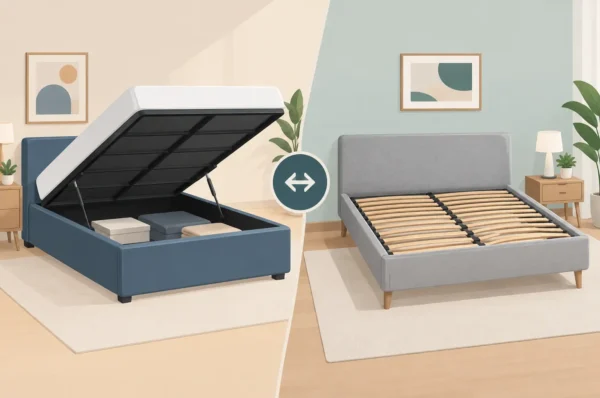
If you are considering a gas-lift or drawer storage bed, allow space for it to operate. Drawer bases need clear room beside or at the foot of the bed. Gas-lift bases open upwards, so check ceiling height, pendant lights and wall art near the headboard. These designs can be excellent for storing linen, seasonal quilts and spare pillows, but the mechanism needs space to work safely.
Do Not Forget Delivery Access
A bed base may suit the bedroom perfectly but still be difficult to get through the front door, hallway or stairwell. Before ordering, measure the narrowest access points from outside your home to the bedroom. Include door widths, hallway turns, stair landings, lifts and low ceilings.
Pay close attention to large one-piece bases, tall headboards and bulky upholstered frames. Some beds arrive in separate components and are assembled in the room, while others have larger sections that need more clearance. If access is tight, compare the packaged dimensions and assembly details before purchase.
For apartment living, check lift dimensions and building delivery arrangements early. For houses, consider gates, steps, narrow side paths and whether furniture needs to turn around a hallway corner. Removing a door from its hinges can sometimes create a little extra room, but it is better to know this before delivery day.
Match the Base to the Room’s Style and Use
Once you have the measurements right, choose a bed base that supports how the room is used. A slimline frame can make a compact bedroom feel more open. An upholstered bed base brings softness and warmth to a main bedroom, while a timber design can suit a relaxed, natural look.
Families may value durable finishes and easy access for changing bedding. Renters may prefer a frame that can move easily to a future home. A generous king bed can be a wonderful comfort upgrade, but a queen may give a smaller main bedroom better balance and more usable space for bedside tables and storage.
When comparing options at Carlisle Furniture & Bedding, keep your measurements handy and check the full product dimensions, not just the labelled mattress size. The right bed base should fit your mattress, your room and the way your household lives.
A well-measured bed does more than fill a space. It gives you room to move, room to rest and the confidence that your new bedroom will feel like the comfortable retreat you had in mind.