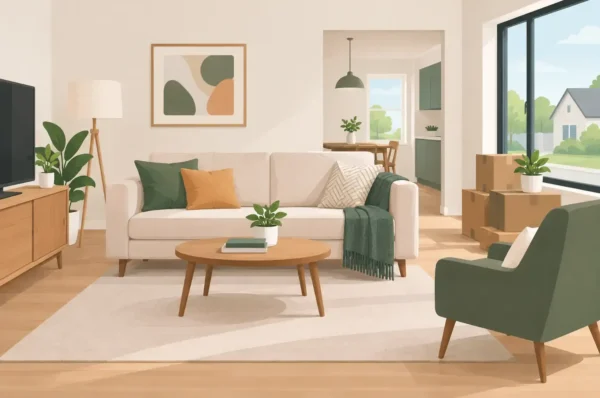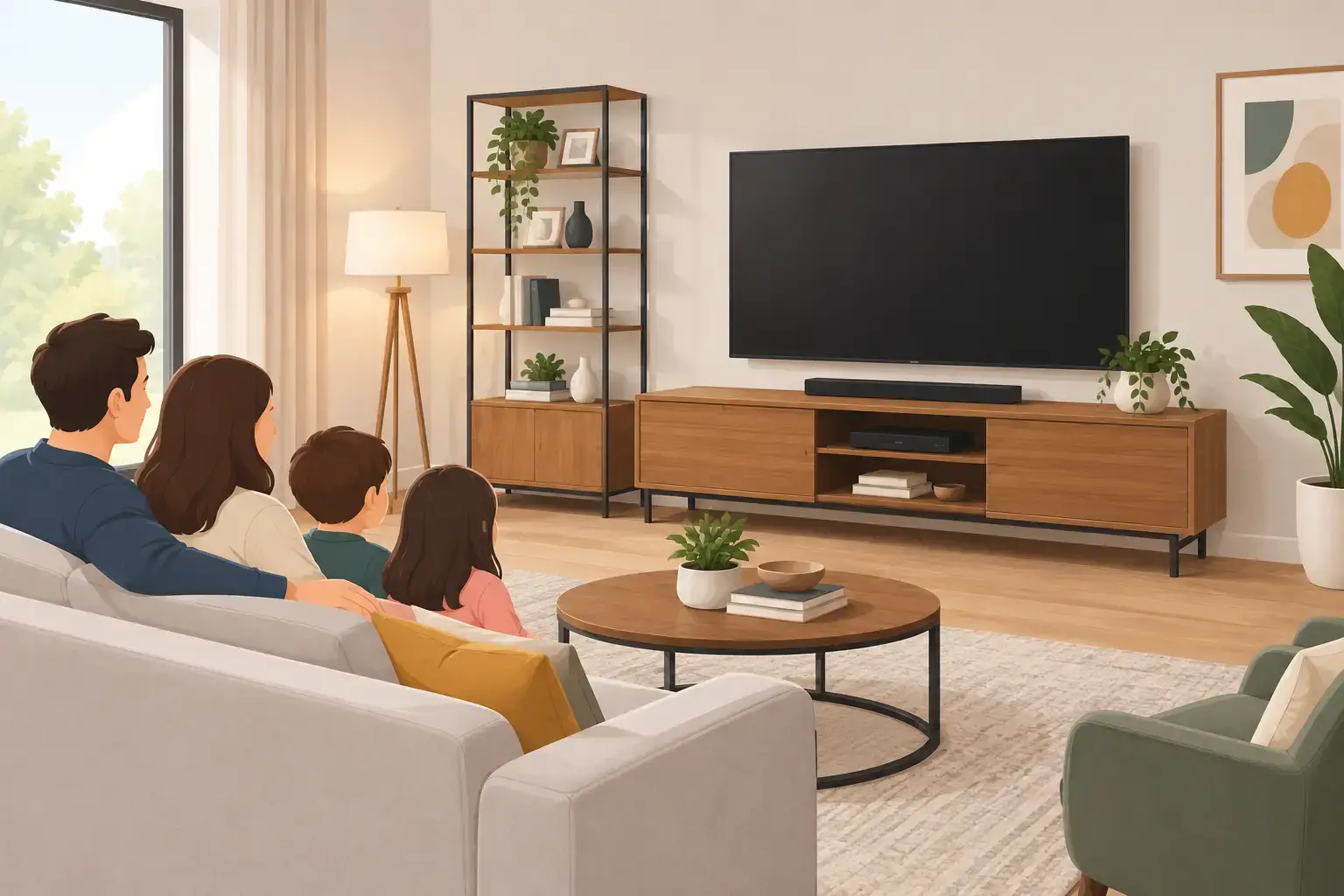
A TV unit does far more than give the television somewhere to sit. It can anchor your lounge room, hide the cables and everyday clutter that gather around the screen, and make the space feel considered even when family life is in full swing. This TV unit buying guide will help you choose a piece that suits your room, your technology and the way your household really lives.
TV unit buying guide: begin with the room
Before falling for a colour or finish, measure the wall where the unit will sit. Record the width, depth and height, then consider the room around it. A generous entertainment unit can look balanced on a long wall in an open-plan home, but may overwhelm a compact apartment lounge or narrow rental.
Leave enough room to move comfortably around the furniture. As a guide, avoid placing the unit so close to a walkway that drawers cannot open or people need to squeeze past it. If your sofa faces the TV unit, allow a clear path between the two rather than treating the unit as an afterthought.
Depth matters just as much as width. Slimline TV units are a smart choice for smaller rooms, but check they still have enough space for your soundbar, gaming console and power boards. A deeper design provides more storage capacity, although it can make a tight room feel crowded. The right balance depends on how much equipment you need to accommodate.
Match the unit to your TV size
Your TV unit should usually be wider than the television, rather than exactly the same width. This creates a steadier visual base and reduces the chance of the screen looking perched or top-heavy. Aim for the unit to extend beyond each side of the TV where possible, particularly with larger screens.
Height affects comfort, too. When seated, the centre of the screen should sit close to eye level. A low-profile unit works well with a wall-mounted television, while a slightly taller cabinet can be better for a TV that stands on its own feet. Check the television’s specifications, including the width of its stand, before you buy. Some wide-screen models need more surface space than expected.
If children, pets or a busy household are part of the picture, stability deserves extra attention. Choose a sturdy unit designed to carry the weight of your TV and secure it to the wall with an appropriate anti-tip restraint where recommended. This small step helps make the living room safer without changing its look.
Choose storage for the life you live
The best TV unit is not necessarily the one with the most storage. It is the one with storage that makes sense for your home. Think about what currently lives near your TV: remotes, chargers, games, consoles, speakers, board games, books, blankets or perhaps the endless collection of kids’ bits and pieces.
Open shelving makes it easy to operate media devices and can give the room a lighter, more relaxed feel. It is ideal for styling a few favourite books or décor pieces, but it does require a little more tidiness. Closed cupboards and drawers keep visual clutter out of sight, which is often a welcome choice for family living areas.
A mix of both gives many homes the best of each. Use open compartments for devices that need a remote signal or ventilation, and closed storage for the things you do not want on display. If you have a gaming console or set-top box, check the internal dimensions carefully and make sure there is airflow around the equipment to prevent overheating.
Cable management is another detail that makes a noticeable difference. Look for cable holes at the back of the unit, or enough space behind and between compartments to guide cords neatly towards the power point. A well-designed TV setting should feel calm from the sofa and look tidy from the side, too.
Find a style that works with the rest of your home
A TV unit is a major visual feature, so it should connect with the furniture already in your lounge room. You do not need every piece to match perfectly. In fact, a room often looks more natural when finishes are coordinated rather than identical.
Timber-look finishes bring warmth to neutral sofas, textured rugs and family-friendly spaces. Lighter oak tones can help a smaller room feel airy, while darker timber finishes add depth and suit homes with richer colours or industrial details. White and light-coloured units create a clean, contemporary look, although they may show scuffs more easily in high-traffic homes.
For a more streamlined feel, choose a low unit with simple lines, concealed handles and minimal detailing. If your room needs character, consider a unit with fluted details, contrasting legs or a textured finish. The key is to repeat one or two elements elsewhere in the room, such as black metal in a coffee table, warm timber in dining furniture nearby, or a similar tone in your rug.
Consider the practical finish
Good looks should hold up to everyday use. Families with young children may prefer durable surfaces that are easy to wipe clean, with rounded edges and fewer delicate details. Renters may favour versatile colours that will work in the next home, while homeowners planning a long-term lounge room refresh may be comfortable choosing a more distinctive statement finish.
It is also worth thinking about natural light. A dark unit can look sophisticated against a pale wall but may make a dim room feel heavier. A pale finish reflects more light, yet can appear washed out in a very bright space unless it is grounded with a darker rug, artwork or sofa.
Plan around your entertainment set-up
Modern TV areas often need to accommodate far more than a screen. Make a quick list of every device that needs a home before comparing units. Include the TV, soundbar, speakers, gaming consoles, streaming devices, modem or router if it must live nearby, and charging points.
A soundbar can sit on top of the unit, but it should not block the bottom of the screen or cover the TV’s remote sensor. If you use speakers, allow room at either side for sound to travel rather than packing everything tightly together. Wall mounting can free up the top surface for styling, though a freestanding TV gives you the flexibility to change the arrangement later.
Do not forget access. You should be able to reach plugs, cables and device controls without dismantling the whole setting. A beautiful unit becomes frustrating very quickly if a simple restart means crawling behind heavy furniture.
Set a budget that includes the full picture
Price matters, but value is about more than the ticket price. A well-proportioned, practical TV unit can make an existing lounge suite look refreshed and help reduce the need for extra storage furniture. Consider durability, storage function and how easily the style will work if you update your rug, sofa or wall colour down the track.
If you are furnishing several rooms at once, choose the larger furniture pieces first. Your TV unit, sofa, dining table and bedroom furniture create the foundation, then smaller decorative items can follow over time. This approach helps you maintain a cohesive look without feeling pressure to finish every detail at once.
For Melbourne locals and online shoppers alike, Carlisle Furniture & Bedding offers TV units and whole-room furniture choices designed to bring comfort, storage and modern style together at an accessible price point. Delivery and flexible payment options can also make it easier to plan a room update around your household budget.
A final check before you buy
Measure once more, including doorways, hallways and stair access if delivery needs to reach an upstairs room. Confirm the TV’s stand width, the location of your power points and whether drawers or doors have space to open fully. Then picture an ordinary weeknight: the TV on, chargers out, kids on the floor, a blanket on the sofa. The right TV unit will make that real-life scene feel more organised, comfortable and unmistakably at home.