A bedroom can look beautifully furnished and still feel crowded when clothing, spare linen and everyday bits have nowhere to go. Smart bedroom storage changes that feeling quickly. Rather than simply adding more furniture, the goal is to choose pieces that suit the room, support your routine and help create the calm sanctuary you want to come home to.
For families, renters and anyone setting up a new home, the best solution is usually a considered mix of larger storage furniture and smaller, flexible pieces. A wardrobe takes care of hanging space, drawers handle folded clothes, and a bedside table keeps the essentials within reach. Once each category has a clear job, keeping the room tidy becomes far easier.
Start with the storage you use every day
Before choosing a new bedroom suite or adding another set of drawers, take stock of what needs a home. Hanging clothing, folded clothing, shoes, handbags, extra bedding and personal items all require different types of storage. A room filled with deep drawers might look generous on paper, but it will not solve the problem if most of your wardrobe needs to hang.
Think about your morning and evening routines, too. If you regularly reach for sleepwear, socks or gym gear, easy-access drawers make sense. If you share a room, separate drawer space can prevent the familiar scramble for a clear surface. For children’s rooms, lower drawers and open shelving can make packing away more achievable without mum or dad having to step in every time.
It is also worth measuring before you fall in love with a piece. Allow room for wardrobe doors and drawers to open fully, plus a comfortable walkway around the bed. In a compact bedroom, furniture that is slightly narrower but taller can offer better day-to-day use than a bulky piece that dominates the floor.
Choose bedroom storage around the bed
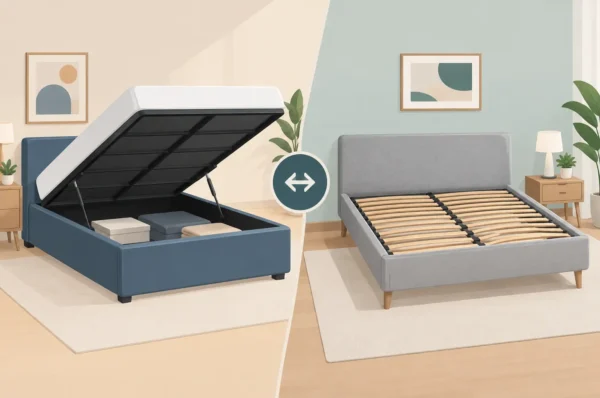
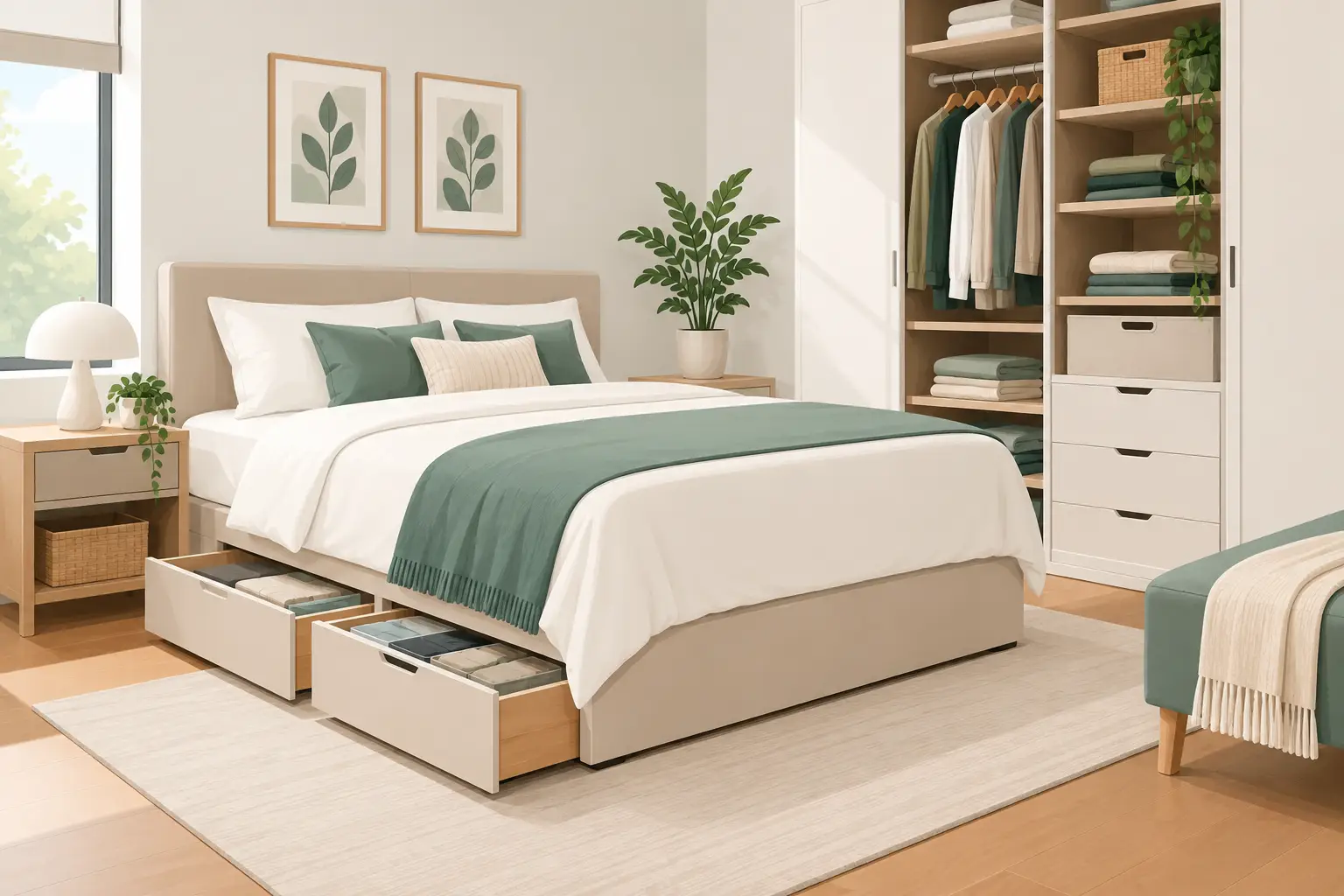
The bed is the natural focal point of the room, so it is the best place to begin. A storage bed is a practical option when wardrobe space is limited or a linen cupboard is already overflowing. Depending on the design, it may include built-in drawers or lift-up storage beneath the mattress base. This concealed space is ideal for seasonal doonas, spare pillows, suitcases and clothing that is not needed every week.
There is a trade-off to consider. Under-bed drawers need clear space at the sides to open, while lift-up bases can be less convenient if you want to grab something every day. For frequently used items, a tallboy or chest of drawers is usually the easier choice. Reserve under-bed storage for the items you want nearby but not constantly on show.
Bedside tables also do more than hold a lamp and a glass of water. A design with drawers keeps charging cables, reading glasses, medication and hand cream off the top surface. In a smaller room, choose a compact bedside table with one or two useful drawers rather than a larger design that leaves little room to move.
Make drawers work harder
A chest of drawers is one of the most flexible pieces in a bedroom. It can hold folded clothing, baby supplies, accessories, paperwork or extra towels, making it especially useful as your household needs change. A low, wide dresser provides a generous surface for a mirror, jewellery box or framed photos. A tallboy uses vertical space and is often a better fit beside a wardrobe or in an awkward corner.
The inside of the drawers matters as much as the outside. Group similar items together and use simple dividers for smaller pieces such as socks, underwear and accessories. Avoid filling every drawer to the very back. A little spare room makes it easier to see what you own and stops clothes becoming creased or forgotten.
For a cohesive look, match the finish and proportions of your drawers with the bed frame and bedside tables. You do not need every piece to be identical, but repeating a timber tone, handle style or colour helps the room feel settled rather than pieced together over time.
Wardrobes for real homes, not showroom displays
A wardrobe should reflect the way you dress, not a one-size-fits-all layout. Long hanging space is useful for dresses, coats and formalwear, while double hanging rails can make excellent use of height for shirts, skirts and folded trousers. Shelves are valuable for knitwear and handbags, but only if they are accessible enough to use.
If you are furnishing a rental or a home without built-in robes, a freestanding wardrobe gives you a complete storage solution without renovation costs. Look for a balance of hanging space, shelves and drawers, particularly when one piece needs to serve two people. Mirrored doors can be helpful in a smaller room because they remove the need for a separate full-length mirror and help reflect natural light.
Door style makes a difference in tight spaces. Hinged doors give a full view of the wardrobe interior but need room to swing open. Sliding doors are a sensible alternative where the bed sits close to the wardrobe. Neither is automatically better – it depends on the room layout and how easily you can access the contents.
Use vertical space without creating clutter
Bedrooms often have unused space above wardrobes, on higher shelves or in narrow corners. This is the right place for items used less often, such as winter blankets, guest bedding and keepsakes. Matching storage boxes or baskets can keep these belongings contained while making the room look more intentional.
Open shelving can add character, especially in teen rooms or larger bedrooms, but it demands a little discipline. Use it for a small number of attractive baskets, books or folded throws rather than every loose item in the house. If you prefer a quieter, more polished look, closed storage is usually the better choice.
Hooks behind the bedroom door are another simple answer for robes, tomorrow’s outfit or a bag that would otherwise end up on the floor. They are most useful when treated as a temporary landing spot, not permanent overflow storage.
Storage ideas for small bedrooms
Small bedrooms need furniture that earns its footprint. Start by keeping the floor as clear as possible. A bed with storage, a taller chest of drawers and wall-mounted lighting can free up valuable room around the sleeping area. Choosing furniture on legs may also help the room feel lighter, although fully enclosed pieces can hide more belongings.
Be realistic about scale. An oversized bed frame may be comfortable, but if it leaves no room for drawers or a wardrobe, the room can become frustrating to live in. Measure the mattress, doorways and available wall space, then map out furniture placement before ordering. It is much easier to adjust a plan than manoeuvre a heavy dresser around a tight bedroom after delivery.
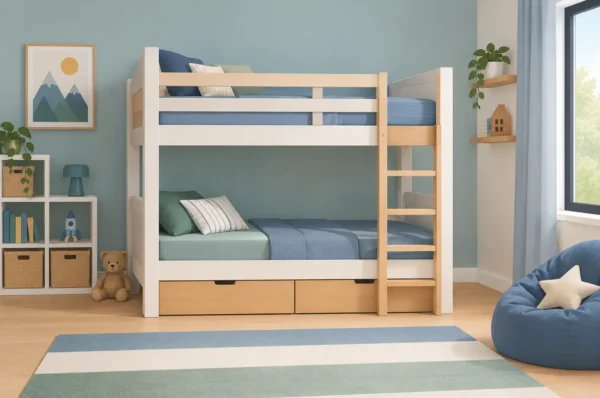
In shared children’s rooms, consider each child’s access to storage. Separate drawers, labelled baskets or allocated wardrobe sections make routines clearer and reduce arguments over whose belongings are whose. As children grow, adaptable furniture with roomy drawers can continue working well through changing clothing sizes and hobbies.
Create a bedroom that stays easy to live in
The best storage plan is not about hiding every possession. It is about giving daily essentials a convenient place, keeping visual clutter low and making the room feel comfortable at the end of a busy day. A coordinated bedroom setting can help, because the bed, drawers, wardrobe and bedside tables are designed to work together in both style and scale.
When comparing options, focus on practical details alongside the look you love: drawer capacity, door clearance, internal wardrobe layout and how the finish will suit your existing flooring and décor. Affordable pieces can still make a bedroom feel considered when they are chosen with a clear purpose.
At Carlisle Furniture & Bedding, you can build a bedroom around the way your household actually lives, whether that means a space-saving storage bed, a generous wardrobe or a complete matching suite. Choose the pieces that make putting things away feel simple, and your bedroom will have more room for rest.