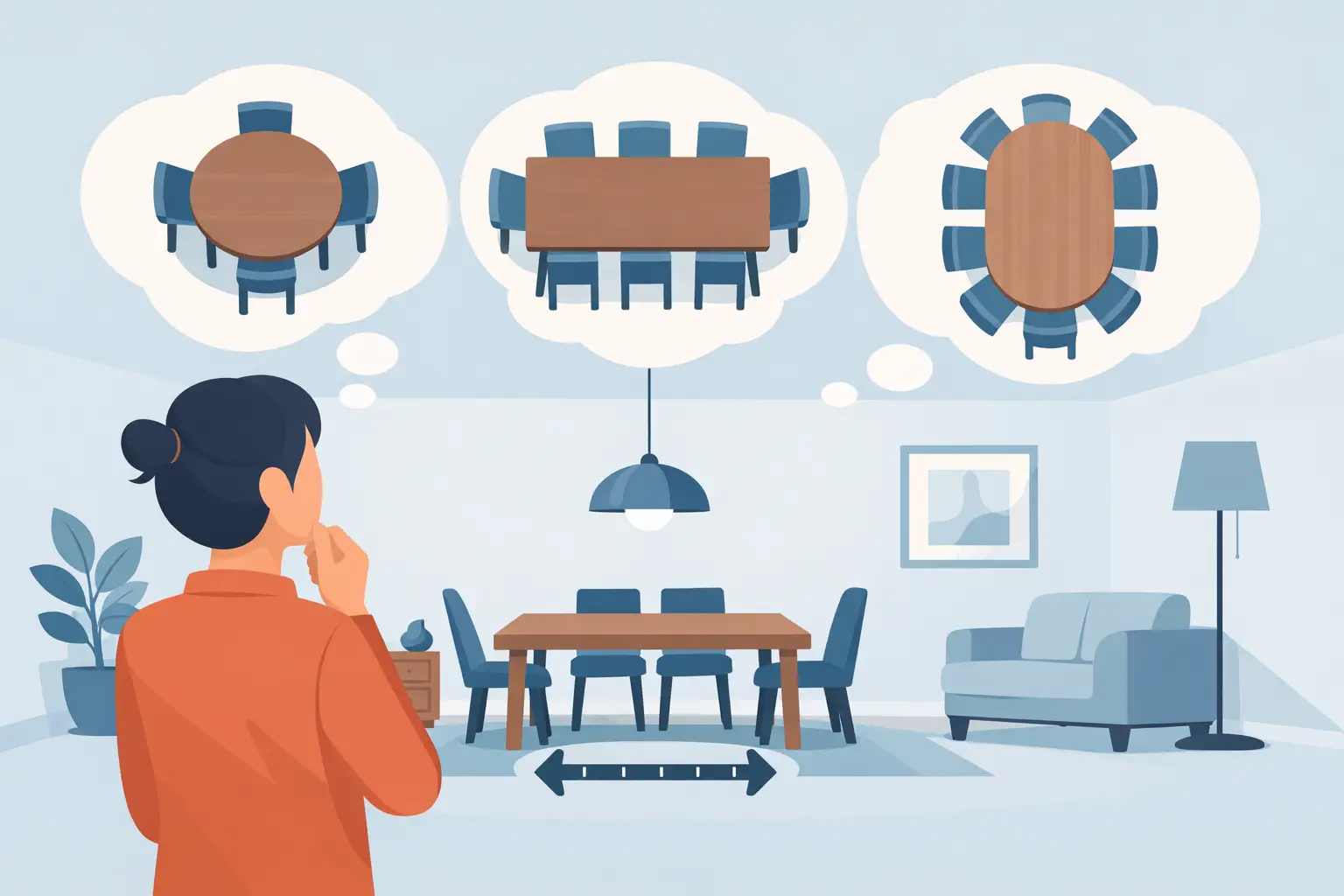
A dining table can look perfect in the showroom, then feel surprisingly large once chairs, family members and the evening rush are part of the picture. If you are wondering what size dining table is right for your home, start with the room around it, not just the number of seats you want. The best choice leaves enough space to move comfortably while giving everyone room to enjoy a meal, homework session or weekend catch-up.
For busy family homes, a dining table needs to do more than fill an empty space. It should suit the way you live now, whether that means quick weekday dinners, long lunches with friends or a table that doubles as a work zone. A few simple measurements will help you choose a piece that feels comfortable from day one.
What Size Dining Table Do You Need?
The most useful rule is to allow at least 90 cm of clear space between the edge of your table and walls, cabinetry or other furniture. This allows someone to pull out a chair and walk behind it without turning every meal into a squeeze.
If your dining area is a high-traffic spot, such as an open-plan kitchen where people regularly pass through, aim for 100 to 120 cm of clearance where possible. You can work with slightly less in a compact apartment or cosy dining nook, but 75 cm is generally the tightest practical minimum. Below that, chairs become difficult to use and the room can feel crowded quickly.
To find your maximum table size, measure the length and width of the dining area, then subtract 180 cm to allow 90 cm of clearance on all sides. For example, a 400 cm by 300 cm room can comfortably take a table up to around 220 cm by 120 cm. The final size may be smaller depending on doors, buffets, islands and walkways.
It is also worth marking the table footprint on the floor with painter’s tape or sheets of cardboard. Include the chairs in your test, not only the tabletop. This simple step can reveal whether a table will block a sliding door, crowd the kitchen island or leave too little room near a sideboard.
Allow Enough Space for Every Seat
As a guide, allow around 60 cm of table edge per person. This gives each diner enough elbow room without feeling overly spread out. For more generous entertaining, particularly when serving platters and shared dishes, allow 70 to 75 cm per person.
A standard dining chair is usually around 45 to 55 cm wide. Chairs with arms, upholstered designs and occasional end chairs can take up more space, so always check their width before committing to a table. A beautiful upholstered chair may be worth the extra room for comfort, but it can reduce the number of seats that fit neatly along one side.
Keep tabletop depth in mind too. A table that is 90 to 100 cm wide works well for most households, leaving room for plates, serving bowls and centrepieces. Narrower tables, around 75 to 85 cm wide, are a smart choice for tight rooms or apartment living, although they are better suited to simpler place settings.
Dining Table Size Guide by Seating Capacity
These measurements are practical starting points for rectangular tables. Exact seating will vary with the table leg position and the width of your chairs.
| Seats | Recommended rectangular table size | | — | — | | 4 people | 120-150 cm long x 75-90 cm wide | | 6 people | 150-180 cm long x 85-100 cm wide | | 8 people | 200-240 cm long x 90-110 cm wide | | 10 people | 240-300 cm long x 100-120 cm wide |
For four people, a 120 cm table is often ideal in a smaller dining zone, while a 150 cm table gives more breathing room and space for serving meals. A 180 cm table is a popular family-friendly size because it usually seats six comfortably without overwhelming a standard open-plan dining room.
If you regularly host Christmas lunch, birthday dinners or Sunday roasts, do not rely on squeezing extra chairs onto a table made for everyday seating. It may work occasionally, but it will not feel relaxed. An extendable dining table can be an excellent middle ground, keeping the room open during the week and making space for guests when it matters.
Choosing the Right Table Shape for Your Room
The shape of your room often matters as much as its size. Rectangular tables are the natural choice for long rooms and open-plan living areas. They offer generous seating and make it easy to place guests along both sides, which is why they suit larger families and regular entertaining.
Round tables create an easy, social feel because everyone faces one another. They are especially useful in square rooms, breakfast corners and compact spaces with no clear head of the table. A 100 to 120 cm round table generally seats four, while a 150 cm round table can seat six comfortably. Remember that a round table needs ample floor space around its widest point.
Oval tables bring some of the same advantages as round designs, with softer edges and better flow around the room, but can accommodate more people in a longer space. They are a strong option when you want a statement dining setting without sharp corners near a busy family walkway.
Square tables work well for four people and suit square dining rooms, but they become less practical at larger sizes. A large square table can make shared dishes difficult to reach and needs substantial room around it. If you need to seat six or eight, rectangular, oval or round designs are often the easier choice.
Consider Legs, Pedestals and Everyday Movement
The dimensions listed for a table only tell part of the story. A table with legs at each corner can limit where chairs sit, particularly on shorter ends. Before buying, check the distance between the legs rather than only the overall length. A 180 cm table might technically fit three chairs along one side, but the frame may mean two chairs are the more comfortable reality.
Pedestal tables free up the edge of the table and make it easier to fit an occasional extra guest. They are particularly practical with round tables and in flexible entertaining spaces. On the other hand, some pedestal bases take up considerable foot room underneath, so sit at the table if you can and check that knees have enough space.
Think about nearby furniture as well. A buffet, display cabinet or bar cart adds useful storage and style, but it also affects circulation. In a compact room, choosing a table with built-in extension leaves or adding a slimline storage piece may make better use of the available floor space.
Dining Tables for Small Spaces
Small dining areas do not need to feel like an afterthought. The right proportion can make a compact home feel more welcoming and more functional. Look for a round four-seater, a narrow rectangular table or an extendable design that adapts when guests arrive.
Benches can also save space because they slide under the table when not in use. They are a practical choice for children and casual family dining, although chairs with supportive backs may be more comfortable for long meals. Combining a bench on one side with chairs on the other can keep the look relaxed while giving you flexible seating.
Glass tabletops and lighter timber finishes can help a dining zone feel more open, while a solid timber or darker finish can create a warmer, more grounded focal point. Neither is automatically better. Choose the look that suits your home, then make sure the dimensions support the way your household moves through the space.
Do Not Forget Table Height
Most dining tables are around 75 to 76 cm high, designed to pair with standard dining chairs that have a seat height of about 45 to 48 cm. This creates a comfortable gap of roughly 25 to 30 cm between the chair seat and tabletop.
Counter-height and bar-height tables can suit casual kitchen spaces, but they need matching stools and are not always ideal for young children, older family members or long dinner parties. For a main dining setting, standard height is usually the most versatile and comfortable option.
When choosing a new setting, measure the room, map out the clearance, and picture a real meal rather than an empty tabletop. The right dining table gives your household space to gather comfortably, making everyday meals feel a little more special and every extra guest feel welcome.