A rug that is too small can make even a beautiful lounge suite look as though it is floating in the middle of the room. The right rug does the opposite: it anchors the seating area, adds warmth underfoot and helps your living room feel finished. If you are asking what size rug for living room layouts, start by looking at the furniture zone rather than the empty floor around it.
For most Australian homes, the best result comes from choosing the largest rug your room and budget comfortably allow. A generously sized rug makes a compact room feel more considered and gives an open-plan area a clear sense of purpose. It is one of the easiest ways to make everyday furniture feel like a complete, welcoming space.
What size rug for living room layouts?
There is no single rug size that works for every living room, but there is one reliable rule: the rug should connect your main seating pieces. At a minimum, the front legs of your sofa and occasional chairs should sit on the rug. In larger rooms, having all furniture legs on the rug creates an even more polished, grounded look.
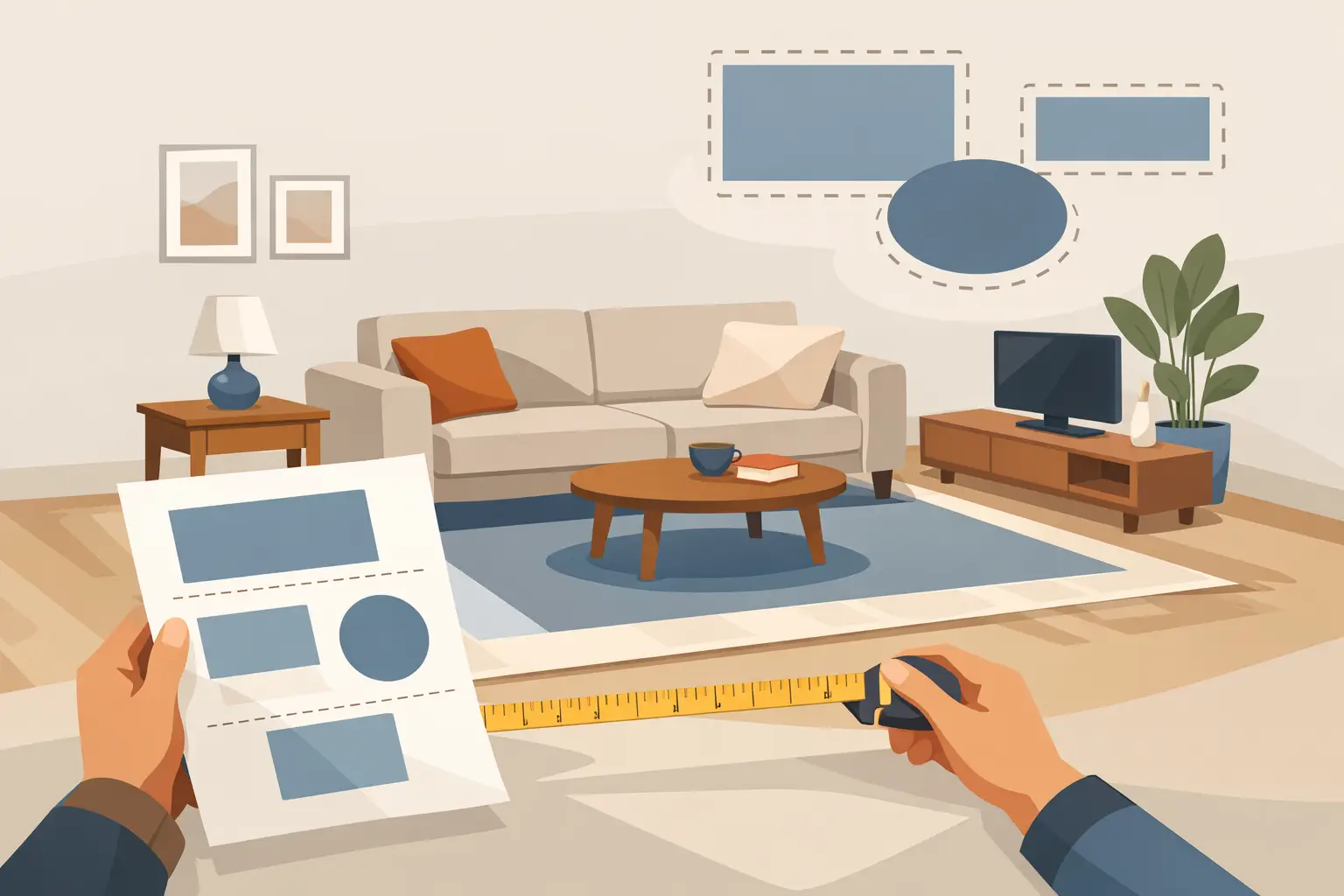
Before shopping, measure the area where people sit, relax and talk – not just the overall room dimensions. Include your sofa, armchairs, coffee table and any chaise or recliner. Then use masking tape on the floor to mark out potential rug sizes. It is a simple step that can save you from bringing home a rug that looks much smaller than it did in the showroom or online.
Leave a border of visible flooring around the rug where possible. About 20 to 30 cm from the walls is a useful guide in a standard living room, although narrow rooms may need less. The aim is balance, not strict maths.
Start with your sofa size
Your sofa is usually the largest piece in the room, so it is the best reference point for selecting a rug. Ideally, the rug should be wider than the sofa or close to its full width. A narrow rug placed in front of a wide three-seater can make the whole arrangement feel undersized.
For a standard two- or three-seater sofa, a 160 x 230 cm rug can work in a smaller lounge or apartment-style living area. It will usually allow the coffee table and front sofa legs to sit comfortably on the rug.
A 200 x 300 cm rug is often the most versatile choice for family living rooms. It suits many three-seater sofas, chaise lounges and sofa-plus-armchair arrangements, with enough room to bring the front legs of each main seat onto the rug. If you are furnishing a new home or refreshing a larger lounge room, this is often the size that delivers the biggest visual improvement.
For spacious living rooms, modular lounges or large open-plan areas, consider 250 x 350 cm or larger. These rugs can hold the entire seating setting, including rear furniture legs, and prevent a big room from feeling sparse. Larger sizes cost more, but they also reduce the need to fill the room with extra décor simply to make it feel complete.
Choose the right rug placement
Front legs on the rug
This is the most popular approach for practical family homes. Position the rug so that it sits under the front legs of the sofa and chairs, with the coffee table centred on top. It creates a connected seating zone while using less floor coverage than a full furniture placement.
It is a smart choice when your room is modest in size, when you have a rug size you already love, or when you need to keep the walkway around the seating area clear. As a guide, allow around 15 to 25 cm of rug beneath the front sofa legs.
All furniture on the rug
If your living room has the space, this placement feels generous and refined. Your sofa, chairs and coffee table all sit fully on the rug, creating a strong central zone within a larger room.
Allow at least 20 cm of rug behind the furniture where possible. This approach works particularly well for open-plan homes, where a large rug can visually separate the lounge from the dining area without putting up a wall.
Rug in front of the sofa
A smaller rug placed entirely in front of the sofa can work in very tight spaces, but it needs careful styling. The rug should still be large enough for the coffee table and should reach close to the sofa rather than sitting in the centre like a small island.
This option is best for compact sitting rooms, rental properties or layouts where furniture cannot be moved. If it looks like a doormat in front of the lounge, step up a size.
Common living room rug sizes
Rug dimensions can feel abstract until you match them to a real room. These common sizes offer a helpful starting point:
- 120 x 170 cm: Best for very small rooms or as a layering piece. Usually too small to anchor a main lounge setting on its own.
- 160 x 230 cm: Suits compact living rooms, smaller sofas and apartment layouts.
- 200 x 300 cm: A versatile family-room size for three-seater sofas, chaise lounges and sofa-and-chair arrangements.
- 250 x 350 cm and larger: Ideal for oversized lounges, modular settings and generous open-plan spaces.
Sizes can vary slightly between rug designs, so always check the actual measurements before you buy. A difference of 20 or 30 cm can change whether the rug reaches your chair legs or leaves an awkward gap.
Consider coffee tables, walkways and doors
The rug has to work for daily life, not just look good in a photo. Place your coffee table fully on the rug and aim for about 40 to 45 cm between the table and the sofa. That gives people enough room to move while keeping drinks, remotes and snacks within easy reach.
Keep clear walking paths around the seating area, especially in busy family rooms where people move between the kitchen, hallway and lounge. A rug should define the zone without becoming a trip hazard. If a door opens into the room, check that it clears the rug pile before committing to a thicker style.
In homes with young children or pets, a low-pile or flatweave rug is often easier to live with. It can still bring colour and texture to the room while being more practical for toys, crumbs and regular vacuuming. Plush rugs feel wonderfully soft underfoot, but they may suit lower-traffic sitting areas better.
How to choose a rug for an open-plan living room
Open-plan layouts often need a rug more than enclosed rooms do. Without walls to define the lounge, furniture can appear scattered across a large floor. A properly sized rug gives the living area its own boundary and helps the space feel organised.
Start with the seating arrangement and choose a rug that contains it. Avoid selecting a rug based on the entire open-plan room, because it may become unnecessarily large and compete with the dining area. Instead, create a clear visual gap between the living room rug and the dining setting.
If the dining and lounge zones sit close together, choose rugs that relate through colour or texture rather than matching exactly. A neutral living room rug can balance a timber dining table, while a patterned rug can bring personality to a room filled with simple, comfortable furniture.
Colour, pattern and shape matter too
Size comes first, but appearance affects how the room feels. Light-coloured rugs can make a smaller lounge feel more open, while deeper tones add warmth and help disguise the marks of busy family life. Pattern is practical in high-traffic spaces and can tie together colours from cushions, artwork and curtains.
Rectangular rugs suit most sofa arrangements because they echo the shape of the furniture. Round rugs can soften a room with lots of straight lines and work beautifully beneath a curved coffee table or in a small conversation corner. Just make sure the circle is large enough to feel intentional, not tucked away.
At Carlisle Furniture & Bedding, we see the best living rooms come together when customers choose the rug alongside their sofa, coffee table and occasional chairs. Seeing those pieces as one setting makes it much easier to judge proportion, colour and the level of comfort you want for your home.
A rug should make your lounge feel easier to settle into – somewhere the family gathers, guests can pull up a chair and your furniture feels properly at home. Measure the seating zone, mark it out on the floor and favour a size that connects the room rather than merely decorating the centre of it.